

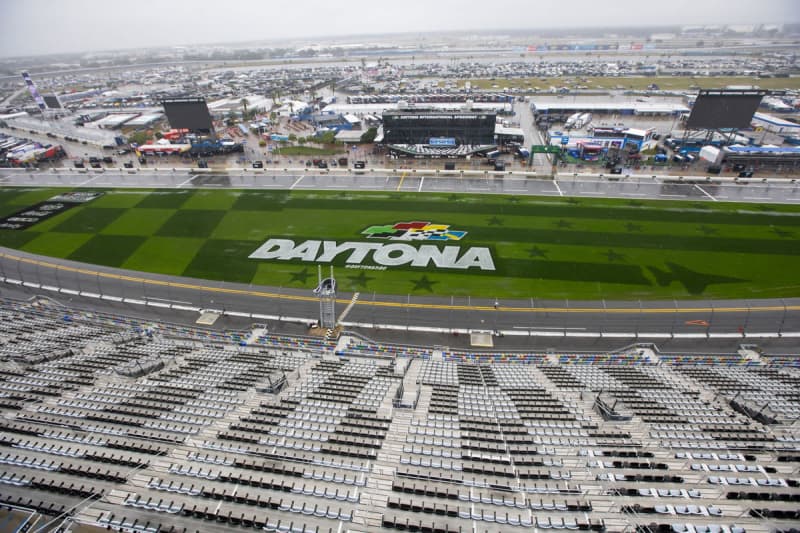
A sport that was once on waiting lists for season tickets now faces a haunting visual, with empty benches seen at tracks like Richmond and Homestead-Miami. In its heyday, packed houses defined American sports. But today, while the sellout at a recent tire test in North Wilkesboro brings some hope, it also reminds us of what’s missing in the sport. It’s not the hunger, it’s the change in schedule. Something that once turned racing into long weekends now has industry insiders questioning its legitimacy.
NASCAR broadcasters explain why the stands are emptying
NASCAR veteran and broadcaster Jeff Burton has raised a significant “wake-up call” regarding the sport’s current trajectory, arguing that the industry is effectively hiding its product from the public.
Advertisement
Speaking on the Herm & Schrader podcastBurton addressed the crisis as the drastic reduction of track time within the calendar. To help teams reduce tire and travel costs, NASCAR has reduced practice sessions to just 20 minutes, with cars frequently showing up on Saturday afternoons.
Burton says this cost-cutting strategy directly undermines the value of a grandstand ticket. “I think pulling our product doesn’t seem like the best way to promote it. It hasn’t helped. It hasn’t helped, you know, I understand there are some benefits to not training as much. Some people think it makes the race better.” Burton said emphatically.
He noted that while the condensed schedule helps owners’ bottom lines, it leaves “die-hard fans,” the very people these changes were meant to satisfy, with nothing to watch for the better part of a weekend.
Burton compared NASCAR’s minimal presence to other global motorsports like Formula 1 and IndyCar, which maintain multiple days of track activity.
Advertisement
“I would like to think there will be a day when we go back to having cars on track more often than we do now. We, of all motorsports televised on a national or global feed, I would say, have the least.” said Burton, making a striking comparison.
“F1 runs its events over three days. IndyCar runs events over multiple days. I think we’re on the right track. Now the racing is longer, but I think outside of the racing I think we’re probably on the track less,” Burton warned. He highlighted how the sport fails to provide a reason for fans to show up early or stay long.
Kenny Wallace highlighted this concern, revealing that track promoters are currently “sharing” their concerns with insiders. Wallace notes that those responsible for ticket sales are increasingly frantic, saying, “We need to put cars on the track. »
The reasoning is simple. When the engines are silent, the stands become vacant. By the time the “main event” takes place on Sunday, the excitement that typically builds over days of practice and qualifying has often faded, leaving empty seats that were previously occupied by fans who thrived on the excitement of a Friday afternoon practice.
Advertisement
As the fight to keep modern fans in their seats continues, the sport also faces internal pressures to better honor the individuals who built its foundations. And Dale Jr voiced them.
Dale Jr. confronts Kenny Wallace over less recognition for fallen veterans
This tension between current logistics and historical respect was recently highlighted when Dale Earnhardt Jr. raised concerns about the NASCAR Hall of Fame induction process.
Much like the current calendar debate, this question focuses on how the sport treats its most loyal contributors. Earnhardt Jr. specifically took issue with fellow veteran and broadcaster Kenny Wallace’s view on the Hall of Fame ballot, calling for more urgent recognition of fallen veterans who paved the way for today’s multi-billion dollar industry.
Advertisement
“I don’t see how you can put someone in the Hall of Fame every year unless you don’t pay attention to the statistics. And that’s where I come in,” Kenny Wallace said on Coffee with Kenny.
To which Dale Jr. responded: “Larry Phillips, Ray Elder, Sam Ard, Jack Ingram, Butch Lindley. Ray was a six-time Winston West champion. He beat the Cup boys twice when they went out west at Riverside. He was racing in NASCAR and building the Western foundation of the sport long before it became popular. So many guys who won hundreds of Nascar-sanctioned races during their careers.”
The concern raised by Junior is that by delaying recognition of these icons, the sport risks losing connection with its roots. A connection that has historically fueled the passion of the very “die-hard fans” that Jeff Burton fears losing.
Earnhardt Jr. argued that recognition of these legends should not be a waiting game, but rather a dynamic part of the sport’s current identity. He said the Hall of Fame serves as the ultimate “bridge” for fans, and that failing to honor these legends while their families and peers are still alive creates a disconnect similar to that of a silent racetrack.
The position NASCAR broadcaster raises red flag on NASCAR schedule as stands begin to empty appeared first on EssentiallySport.
