

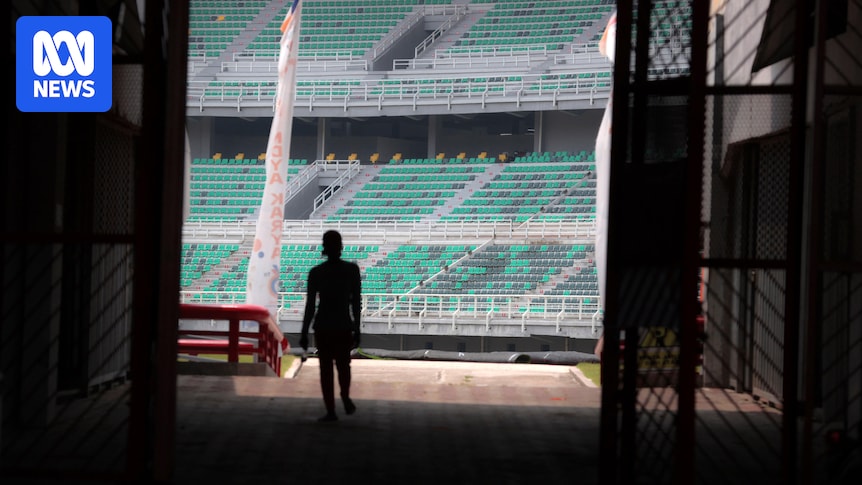
Indonesian players and fans were left dismayed after the country was excluded from hosting the Under-20 FIFA World Cup, following outrage among politicians in the Muslim-majority country over Israel’s participation.
Key points:
- Indonesia has no formal ties with Israel and has long been a strong supporter of Palestine.
- Players and fans fear FIFA’s decision could lead to fines and ostracization from world football.
- Football is widely followed in Indonesia where it has often been overshadowed by violence.
FIFA, world football’s governing body, stripped Indonesia of its rights to host the tournament due to what an Indonesian official said was a failure to fulfill its commitments to the tournament.
FIFA made the appeal after the Indonesian Football Federation (PSSI) announced it had canceled the tournament draw because the governor of Bali refused to host the Israeli team.
FIFA made this decision following a meeting between its president Gianni Infantino and the president of the PSSI, Erick Thohir.
An Indonesian national team player blamed politicians.
“We sacrificed our time, our thoughts, our sweat and even our blood. But it suddenly failed because of your political reasons,” said striker Rabbani Tasnim Siddiq on Instagram.
Another player, Hokky Caraka, said he lost the opportunity to achieve “a life goal that should have made my parents proud, scoring goals in the U-20 World Cup.”
President Joko Widodo said he was “sad and disappointed” by FIFA’s decision, but said it must be respected.
“Don’t waste your energy blaming each other. As a great nation, we must look to what is ahead and not behind,” he said, adding that he had asked Mr Thohir to work to avoid FIFA sanctions “including the possibility of hosting other international events”.
Mr Thohir told a news conference that FIFA was considering sanctions, and the harshest measures it could introduce would include banning Indonesia from competing at the sport’s highest international level.
“I am working hard to negotiate again with FIFA so that sanctions can be avoided,” he said.
Indonesian President Joko Widodo did not want the country to be “ostracized” from world football and ordered PSSI to transform the sport in the country after losing organizing rights, Mr Thohir said.
Calls for “peace and justice” amid political tensions
Indonesia has no formal ties with Israel and has long supported the two-state solution to the Israeli-Palestinian conflict. Protesters marched in Jakarta this month demanding that Israel not be allowed to participate in the tournament.
Football enjoys a large following in Indonesia, although it is often overshadowed by fan violence. (AP: Dita Alangkara)
Indonesian People’s Consultative Assembly Chairman Hidayat Nur Wahid was among those who rejected Israel’s involvement in the World Cup, saying “Israel is colonizing Palestine and Indonesia is against any colonialism as stipulated in the constitution.”
But Akmal Marhali, an Indonesian sports expert and coordinator of the sports advocacy group Save Our Soccer, said he disagreed with using “Israel’s colonialism” as an excuse to reject them in a sporting match.
“The Israelis who would come are not the army, nor the government, but athletes and footballers who are not interested in politics,” Mr. Marhali told ABC.
Mr Marhali said it was possible that Indonesia could receive several sanctions from FIFA after being excluded from hosting the competition.
“We will be frozen. If we are suspended, we will not be able to participate in any FIFA organized events until this suspension is lifted.“
In addition to the FIFA sanctions, the country has already experienced other consequences, including the heartbreak of young Indonesian footballers who will no longer be able to participate.
Mr. Marhali said Indonesia must offer “eternal peace and social justice” for Israel in sports, despite the country’s objections to Israeli policies in occupied Palestine.
“Even if we are against their policies, Israel deserves justice.“
The president of an Indonesian fans association, Ignatius Indro, said the PSSI and the government should ensure that politics does not interfere in football.
The loss of lodging rights is a national failure, he said.
The sport has huge success in Indonesia despite the lack of international success since qualifying for the 1938 World Cup under the name Netherlands Indies.
PSSI said the loss of organizing rights would harm the national team’s chances of participating in other FIFA tournaments.
The tournament is still scheduled to take place from May 20 to June 11 at a location that has not yet been announced.
The removal of hosting rights also means Indonesia automatically loses its place in the tournament.
“We buried the dreams of our own children,” said coach Nova Arianto.
Loading…
ABC/Reuters
