

There has recently been a wave of former NBA G League players and international pros get green light to play college basketball across the country, sparking widespread debate over whether it should be allowed.
Under NCAA rules, basketball athletes can claim college eligibility if they maintain “amateur status” — five years or less after high school graduation; NCAA qualifications out of high school; Did not enter the NBA draft (or did but never signed an NBA contract).
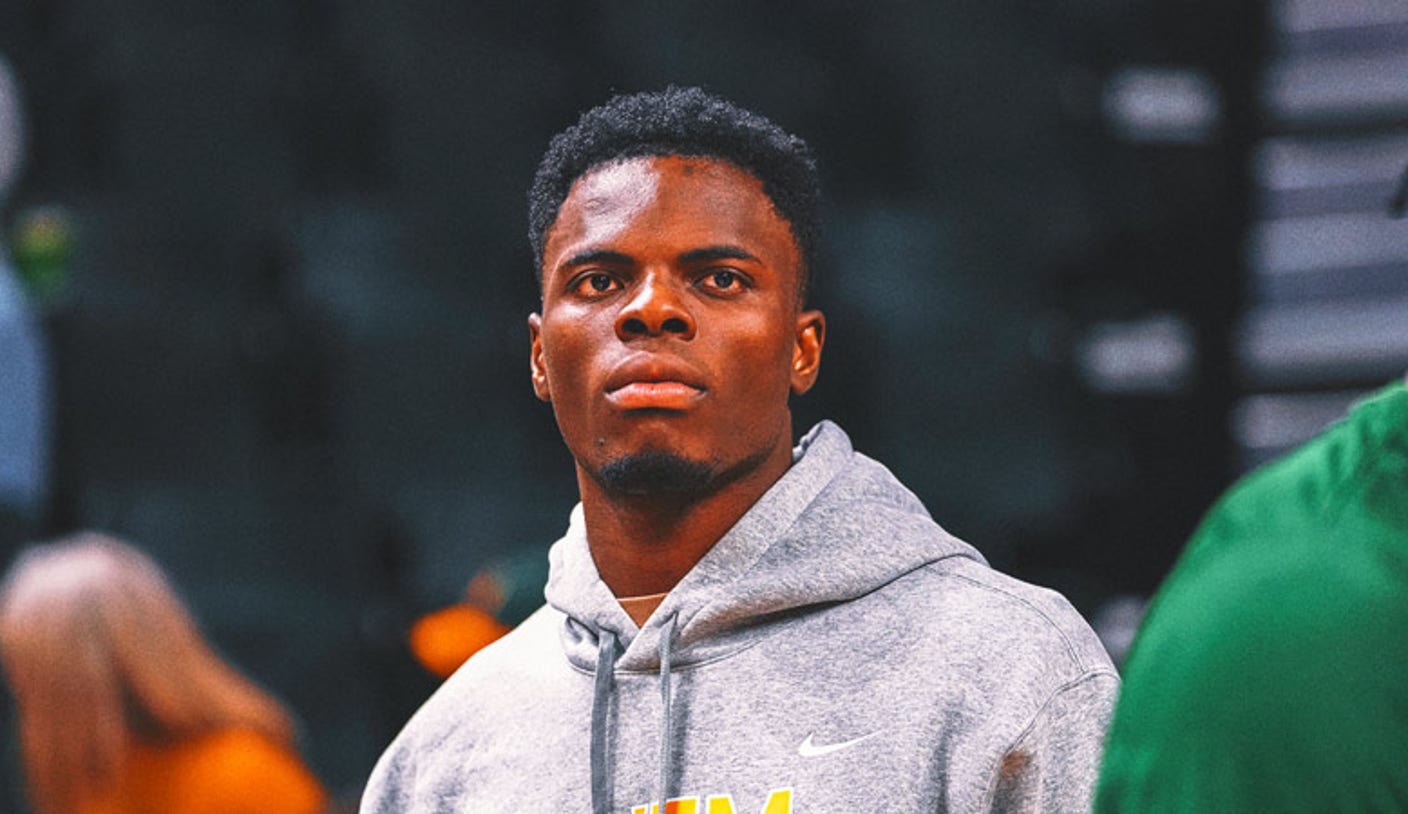
Michigan State coach Tom Izzo recently spoke about this problem after Baylor received a commitment from James Nnajithe 31st overall pick in the 2023 NBA draft on Christmas Eve. Nnaji, 21, a 7-foot center from Nigeria, was granted immediate eligibility as a midseason addition and will have four years of eligibility remaining.
Nnaji has never played in the NBA or the G League, the NBA’s developmental league, but he appeared in five NBA Summer League games for the New York Knicks in July and played professionally overseas last season. He was even part of the monster three-team trade that shipped Cities of Karl-Anthony to the Knicks for Julius Randle At Minnesota Timberwolves in October 2024; the trade also included Donte DiVincenzo and draft assets, including the rights to Nnaji and a protected first-round pick in the Knicks’ top 13 in 2025 via the Detroit Pistons.
“I thought I had seen the worst, then Christmas came” Izzo said. “What happened just topped it. … Now we’re taking guys who were drafted into the NBA and everything? … If that’s what we want to do, shame on the NCAA. Shame on the coaches too, but shame on the NCAA because the coaches are going to do what they have to do, I guess, but the NCAA is the one.
“These people on these committees who are making these decisions to allow something so ridiculous. … I just don’t agree with it.”
Baylor coach Scott Drew responded to Izzo’s comments, saying he was just rolling with the punches.
“Coach Izzo and I are friends,” Drew said. “I have a lot of respect for him. … Like he said, most coaches are 99 percent in agreement on the things we would like to see accomplished in our game. At the same time … until we get to collective bargaining, I don’t think we can come up with rules that are acceptable (and) enforceable by then.
“I think we all have to be willing to adjust and adapt to what’s out there. Initially, when the game first came out with G League players, I wasn’t in favor of that either. But, again, we don’t set the rules. As we figure things out, we’re always going to adapt to put our program in the best position to succeed.”
College coaches around the world have been largely critical. PurdueMatt Painter of was “at a loss for words”, by Sports Illustratedwhen he first heard the news and initially thought it was a joke.
“We just want to know the rules so we can follow them,” Painter said. “We don’t know what’s going on.”
“Everything I read about college coaches is great, but what’s not being said is that it’s not college basketball anymore.” Saint John head coach Rick Pitino posted on Tuesday. “This is professional basketball with budgets that rival the Euroleague. So the pros have trade deadlines. The G League is way below college basketball in terms of salary scale. Even two-way players are way below that. Unfortunately, the game I’ve played in for over 40 years no longer exists.”
Pitino also joked that he had “first drafts” on the two-time NBA MVP Giannis Antetokounmpo. “So let me be clear, we can now recruit G League players? Is the NBA next?” Pitino wrote.
On the other hand, in the first year Auburn Coach Steven Pearl is in the minority.
“It’s a waste of time complaining about it,” Pearl said. by The Athletic. “If there’s a flaw that you can expose and exploit to make your team better, that’s what you need to do. I think what Louisville (did) is great. These guys are creative thinkers and they try to find ways to get ahead of the game.
“Every day, every week, (the rules) change. So you have to adapt to them.”
Nnaji’s most recent academic engagement has reignited a debate that has gained momentum of late.
In September, the NCAA judged the 21-year-old guard Thierry Darlan eligible to join Saint Clare despite his professional career, which included two years in the G League after preparation at the NBA Academy Africa in Senegal. Darlan was the first former G League player to appear in a college game and became the face of a growing trend across the country.
In October, the NCAA decided to allow 21-year-old guard London Johnson to join Louisville next year with two seasons of eligibility after playing three years in the G League.
In November, the NCAA decided to allow 22-yard center Abdullah Ahmed, who spent the last two years in the G League, to join BYU next season. He was granted at least two, if not three, years of eligibility, by Yahoo Sports.
How many more players will join this rapidly growing roster? Only time will tell.
Want great stories delivered straight to your inbox? Create or log in to your FOX Sports account, follow leagues, teams and players to receive a personalized newsletter daily!
