

The WNBA’s latest proposals for the new collective bargaining agreement (CBA) continue to arrive and, frankly, they’re getting more confusing by the day. Now, we know that negotiation points are often dramatic when they’re first brought to the table, so they can be ignored — but some of these new rules suggested by the WNBA make little sense. Beyond meaning, they don’t even seem like deals the WNBA would seriously be able to implement without harming fan engagement, viewership, and the relationships players have with the college system and their international federations.
Additionally, they are seriously undermining the players in the league, as well as those who will enter the league in the next few years. Players like Juju Watkins and Sarah Strong will undoubtedly become some of the biggest stars in the WNBA immediately and do not deserve to have their earning potential reduced due to policies proposed and agreed to by parties they are not yet a part of.
Advertisement
Negotiating a collective bargaining agreement raises many topics about labor rights, equality and justice, but when the league negotiating their contract is a women’s league, these injustices are brought up much more quickly. Female athletes have a lot more to negotiate in their contracts, especially when you think about the history of global pay inequality and differences in health care for women, to name just two important points.
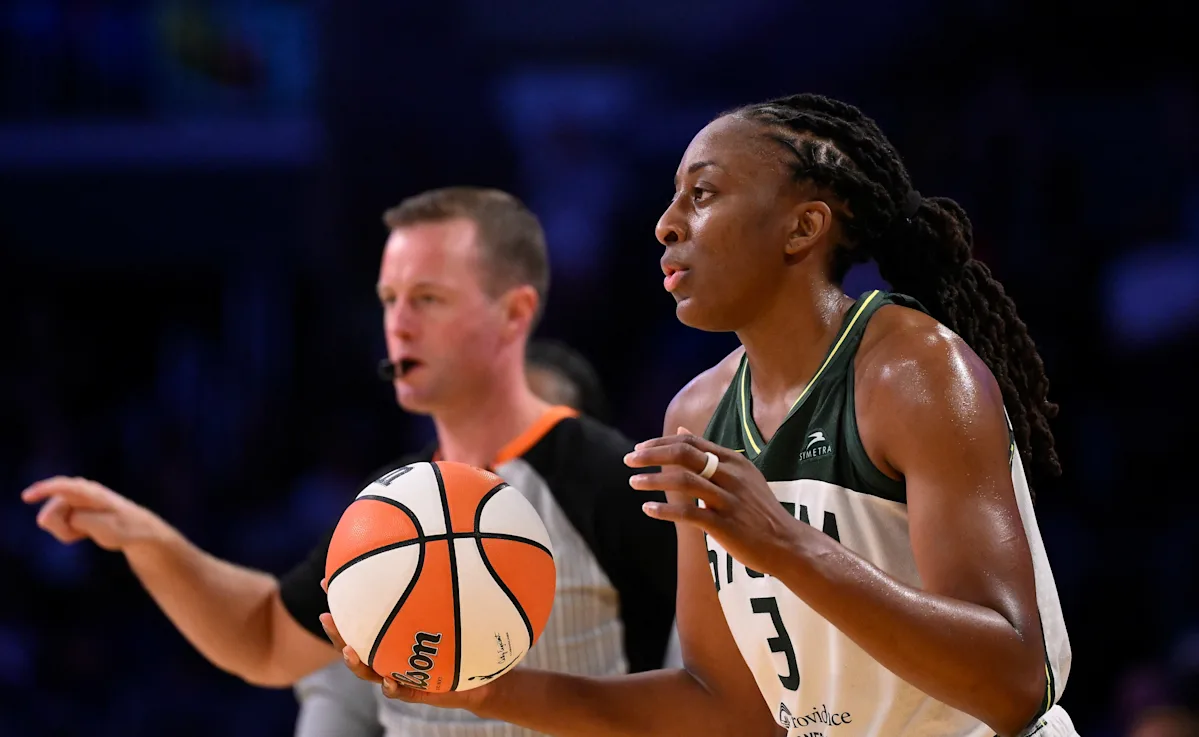
Players’ union president Nneka Ogwumike told The Athletic this week, players “do not feel valued in these discussions as they present themselves today.” She went on to say that she felt the players “were heard, but not listened to.”
Here are some elements that the WNBPA (the WNBA players’ union) proposes to add to this new CBA, by The Athletic’s Ben Pickman:
-
Eliminate base designation and team-exclusive negotiating rights (set-aside contracts).
-
Shorten the duration of contracts at the rookie level, which are currently 3 years with a team option in the 4th year.
-
Inactive maternity leave for parents who have not given birth.
-
“Significant” retirement benefits.
-
Uniform league-wide standards for private practice, training and recovery facilities.
-
League-wide staffing needs, including strength and conditioning coaches, athletic trainers, doctors, etc.
-
Reimbursement for mental health services.
-
A revenue sharing program that scales with league growth each season.
On the other hand, here are some of the WNBA’s proposals, according to Pickman:
Advertisement
-
Stop paying for team accommodation.
-
A mandatory draft for incoming rookies, with salaries of absent players cut in half.
-
Limit the number of guaranteed contracts each team can have each season.
-
Bring forward the start of the season.
-
One week of non-maternal paid parental leave.
Even comparing these proposals, you can see how undervalued players are, and that’s without addressing the issues of salary and revenue sharing. As Ogwumike says, the players feel it too. In recent years of negotiations, perhaps the league could use finances or lack of reach to explain some of the things it didn’t want to offer, but the landscape for women’s sports is different. The WNBA has seen tremendous growth over the past five years, and the fact that there is no provision in the CBA requiring teams to have athletic trainers on staff is incredibly outdated. Much of the way WNBA players are treated is outdated.
Funny enough, a lot of the way the WNBA markets its league and its players has to do with this “girl power” mentality. Highlighting how women are breaking barriers and glass ceilings, being very driven to publicize viewership growth and how the numbers reflect how the league has grown. Gamers are the reason for all this growth and the main subject of content that fuels this growth. Yet they are still not considered valuable enough to be treated as they wish in a contract?
This growth in women’s sports has meant that we now have research proving that female athletes need to train differently than their male counterparts in order to reduce the risk of injury. This growth has allowed more women to feel comfortable expanding their families over the course of their careers and making a comeback that didn’t happen as often before. This growth has meant that female athletes, forgotten in the workforce, have become businesswomen and global ambassadors.
Yet their own contract doesn’t even reflect that growth, and these proposals make it seem like the next one won’t either.
Advertisement
To compare negotiation points with another US-based women’s sports league, Let’s take a look at the NWSL CBA, signed in August 2024. The NWSL was able to double its team salary cap, while adding a revenue sharing program tied to media rights and sponsor money from the previous season. On top of that, the NWSL eliminated its draft and made all players automatically enter free agency as rookies. They were also able to guarantee every contract, enforce no-trade clauses, and expand family planning and health benefits.
All of these points help NWSL players have more autonomy over their lives and careers, where they play, and enjoy financial security. It also sets a precedent for what female athletes deserve, and WNBA players hope to gain a new level of autonomy in this new contract, just as the NSWL was able to do.
There’s nowhere to hide either. The WNBA has a dedicated and vocal online fan base who aren’t afraid to make noise on these topics. The WNBA’s online fans played a large role in why the league ultimately adopted the charter flight program, and fans’ vocal support for players in these negotiations puts pressure to reach an agreement. But not just any deal, one that reflects the wants and needs of players as a workforce.
This new CBA should make WNBA players feel valued for the work they have done for the league, and they will hold on until that happens.
