

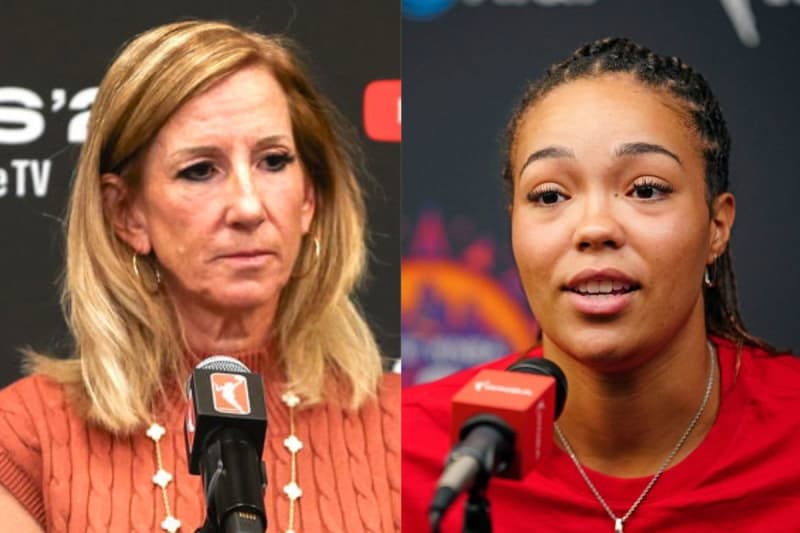
Time is becoming the one thing neither side has. Heading into the 2026 season, the WNBA and WNBPA remain far apart on key collective bargaining issues. However, there remains one crucial point on which both camps seem aligned: neither wants to miss matches.
This common understanding emerged as the negotiations dragged on, even without any formal progress on the CBA itself. Basketball analyst Sabreena Merchant recently explained why a work stoppage makes little sense as leverage in this situation.
Advertisement
“I really don’t think either side wants to miss games. Like, I don’t think it’s a negotiating point that makes sense for either side to miss games. Like I’ve seen other lockouts where you could say one team was saying, yeah, we have no problem shortening this to half a season or even getting rid of the season because there are critical issues we need to address.”
Merchant then highlighted why this negotiation seems different from previous work. conflicts between sports. “So I don’t understand if the WNBA or the players’ association think that missing games is going to help their cause.”
This perspective reflects the reality that both sides face. Canceled matches would immediately affect ticket sales, broadcast revenue, sponsorship commitments and overall league dynamics. After years of steady growth, neither the league nor the players want to risk undoing that progress.
Even if a CBA deal were finalized tomorrow, the season would not automatically fall into place. Key issues such as pension benefits, housing standards and development places still need to be addressed and implemented.
Advertisement
With the regular season scheduled to begin on May 8, the schedule is quickly tightening. Each passing week increases the pressure on league operations, team planning and player preparation.
WNBA Submits New CBA Proposal to Players Union
In order to move negotiations forward, the WNBA submitted a new proposal to the players’ union. The proposal came about a week after a meeting in early February, according to a report cited by USA Today Sports. Although the details have not been made public, this decision itself demonstrates a renewed commitment from the league office.
Yet the fundamental disagreement remains unchanged. Revenue sharing remains the main sticking point.
Advertisement
Players are seeking approximately 30 percent of the league’s gross revenue, and until significant progress is made in this area, uncertainty will persist over the start of the season.

LOS ANGELES, CALIFORNIA – DECEMBER 04: Nneka Ogwumike attends the Teen Vogue Summit & Block Party at Goya Studios on December 04, 2021 in Los Angeles, California. (Photo by Alberto E. Rodriguez/Getty Images)
WNBPA President Nneka Ogwumike has been explicit about what players want and what they don’t want. “I know our players want to play 100 percent this year,” Ogwumike said. “We want a season. We made the case that once we get (revenue sharing) right, we can do everything else.”
At the same time, Ogwumike stressed that although strike action remains a theoretical option, the union is not rushing towards this option. “You know, we’re not just going to say, ‘Hey, today’s the day (we’ll strike),'” she said. “You know, I think that’s what we’re demonstrating right now is negotiating in good faith.”
Advertisement
Several major league events are currently on hold as talks continue. The expansion draft for the Toronto Tempo and the new Portland franchise has yet to be completed. Free agency and the WNBA draft also await clarity from the CBA process.
For now,good faith negotiations remain intactbuilt largely on the shared desire to avoid canceled matches. But this common ground is narrow. If trust erodes, particularly around revenue sharing, the consequences could extend well beyond this season. For a league still building its long-term foundations, the coming weeks could prove decisive.
