

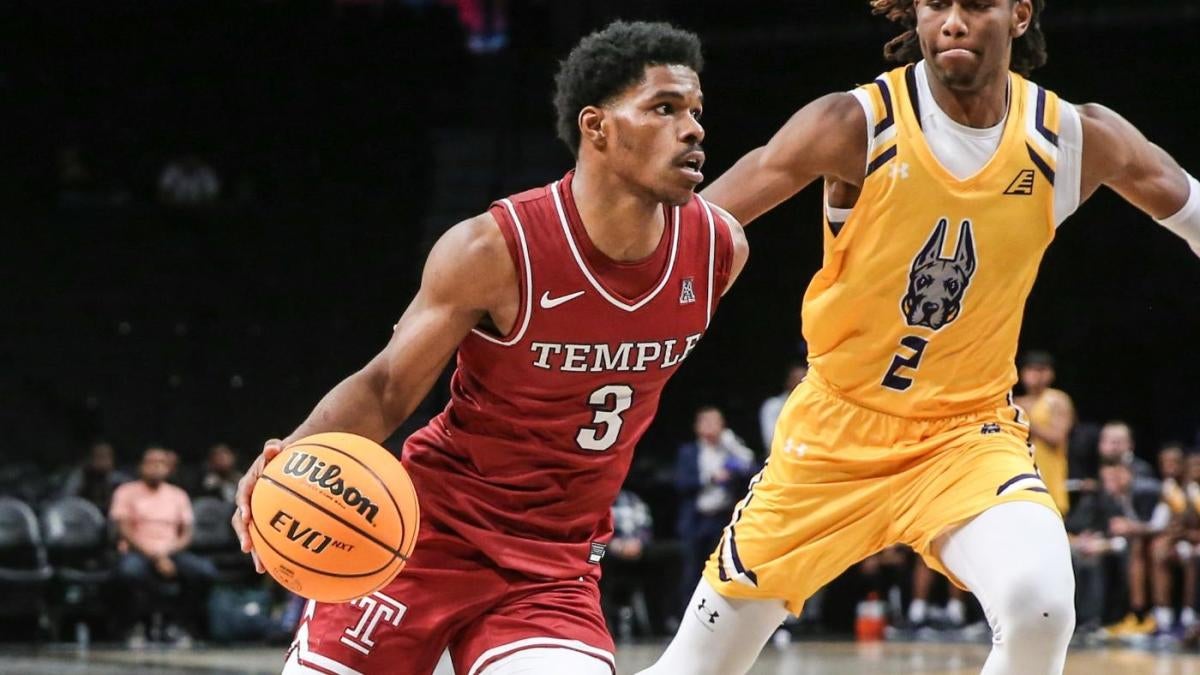
The NCAA announced that it was pursuing violations of sports betting rules involving 13 athletes in six college basketball programs: Arizona State, Eastern Michigan, Temple, New Orleans, North Carolina A&T And Mississippi Valley State. NCAA enforcement personnel reportedly discovered some student-athletes “betting on and against their own teams” alongside other allegations of point shaving.
This follows Fresno State Mykel Robinson and Jalen Weaver, in addition to San Jose State Steven Vasquez have their eligibility was permanently revoked earlier this week for gambling on themselves.
“Through the NCAA’s extensive integrity monitoring program and network of sources, law enforcement personnel became aware of unusual betting activity surrounding regular season games played by these teams,” the NCAA said. announced in a press release. “Law enforcement followed up on these reports and proved — in some cases, via text messages, social media direct messages, and other physical evidence — that violations occurred.”
The NCAA noted that the schools and current coaching staffs “are not believed to have been involved in the violations.”
Arizona State is the only power conference school connected to the NCAA investigation so far. The men’s basketball program was previously embroiled in a shaving scandal in men’s basketball in the mid-1990s, when one of its best players, Stevin “Hedake” Smith, conspired with teammate Isaac Burton to win points in certain games for a campus sportsbook in exchange for tens of thousands of dollars.
The school issued a statement to CBS Sports on Thursday: “Arizona State University is aware of the NCAA investigation and findings related to a former student-athlete who is no longer enrolled at ASU. The university has fully cooperated with all investigations and has not been involved in any way.”
The former Arizona State player who allegedly engaged in illegal gambling activity is BJ Freeman, a source told CBS Sports’ Matt Norlander. Freeman was a shooting guard who averaged 13.7 points, 3.9 rebounds and 2.6 assists in 22 starts before being kicked off the team in late February due to what ASU revealed at the time was conduct detrimental to the program. Freeman, who began his career in Milwaukee, publicly announced his commitment to UCF in late April, but the school never acknowledged he was a part of its program.
The lead-up to Thursday’s fallout has been well documented. Hysier Miller, Temple’s leading scorer in 2023-24, investigated for alleged loss of points. Miller, who was transferred to Virginia Tech before the 2024-25 season, was fired from the Hokies before playing in a single game.
Accounts linked to gaming network under federal investigation for his participation in two NBA The betting cases were also linked to “unusual betting activity” on North Carolina A&T, Mississippi Valley State and Eastern Michigan last season. North Carolina A&T suspended three basketball players, including the season’s top two scorers (Landon Glasper And Ryan Forrest) for “violation of team rules” last January, but Glasper told CBS Sports that he “never played.” Glasper transferred to Miss of the South last spring, while Forrest is still in the transfer portal.
The same accounts linked to the investigation were also involved in suspicious betting activity who placed large bets on prop bets involving former Toronto Raptors forward Jontay Porter during the 2023-24 season and former Hornets guard Terry Rozier in 2023, ESPN reported. Porter was kicked out of the league, while Rozier has yet to be charged or directly accused of wrongdoing.
“The NCAA monitors more than 22,000 competitions each year and will continue to actively address competition integrity risks like these,” NCAA President Charlie Baker said in a statement. “I am grateful for the hard work of the NCAA enforcement team and for the cooperation of schools in these areas. The rise of sports betting is creating more opportunities for athletes across all sports to engage in this unacceptable behavior, and while legalized sports betting is here to stay, regulators and gaming companies can do more to reduce these integrity risks by eliminating prop bets and giving sports leagues a seat at the table when developing policy.”
Matt Norlander and Kyle Boone of CBS Sports contributed to this report.
