

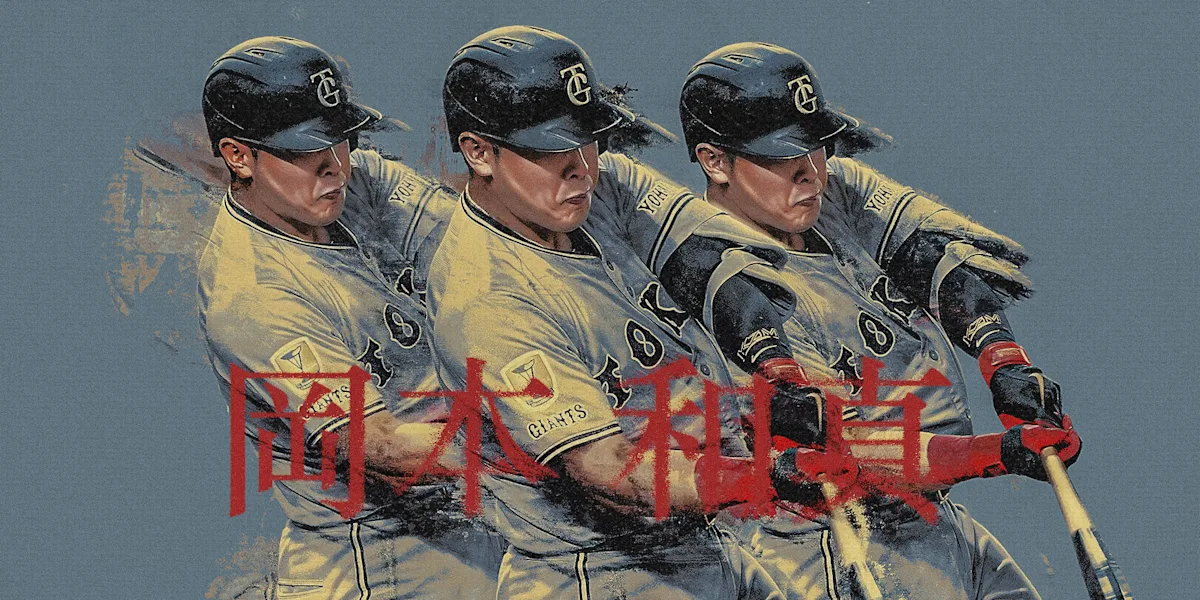
The third and final star to move from the Japanese NPB to the MLB this offseason, third baseman Kazuma Okamoto, reportedly reached a four-year, $60 million deal with the Toronto Blue Jays on Saturday. Following the surprising results of slugger Munetaka Murakami signs with the White Sox And Right-handed pitcher Tatsuya Imai joins the Houston AstrosOkamoto’s move represents the highly anticipated finale in a trilogy of signings that have has dominated the hot stove talk in recent weeks.
Fair or not — the two are close friends, so calling them rivals is somewhat misleading — it’s been difficult to assess Okamoto’s chances for MLB success without comparing him to Murakami, given the timing of their MLB stints and their contrasting styles as hitters. It turned out that Murakami’s swing-and-miss tendencies and unimpressive prospects as a defender limited his market more than expected, resulting in a two-year pact with the rebuilding White Sox, rather than a long-term mega-deal on the scale of a surefire superstar.
Advertisement
But Okamoto, with well-above-average ball-striking skills and a significantly better chance of sticking at third base, offers a much more plug-and-play profile to invest in.
That doesn’t mean Okamoto won’t have to make adjustments. And since he’s closer to the age of a typical free agent — he turns 30 on June 30 — it was hard to imagine him landing a multi-year contract approaching nine figures like a domestic free agent would with his resume. Yet Okamoto’s track record of consistent excellence and advanced offensive skills combine to offer far more optimism for immediate contributions at the big league level than that inspired by Murakami.
Okamoto may not possess the spectacular ceiling that Murakami demonstrated earlier in his career, when his breathtaking energy production fueled back-to-back Central League MVP awards and the single-season record for home runs by a player of Japanese descent, with 56 in 2022. But Okamoto is one of the most accomplished NPB hitters of his generation, and he’s no slouch in the slugging department either: his 152 home runs ranks second behind Murakami. (181) over the past five NPB seasons. Only three other hitters in the league have surpassed 100 homers in that span, a reminder of both the NPB offensive environment and Okamoto’s (and Murakami’s) ability to overcome such circumstances and produce outlier hitting totals regardless.
Advertisement
(Get more Toronto news: Blue Jays team feed)
While Murakami displays breathtaking exit speeds, Okamoto’s power output is the product of superior contact skills and an exceptional ability to elevate the ball with frequency. His 11.3% strikeout rate and 90% zone contact rate in 2025 were both career best marks, and he regularly posted groundball rates in the 30s, which would rank among the lowest grades in MLB if this trend continues.
Adding to Okamoto’s star power is the fact that Okamoto played for the Yomiuri Giants, the extremely popular Tokyo-based franchise that has the most Japan Series titles in NPB history. Playing for what is essentially the NPB Yankees carries an elevated status, and even though – as with the Yankees – it’s been a minute since Yomiuri’s last championship (2012), Okamoto’s rise to one of the league’s most important franchises has contributed significantly to his star power.

Kazuma Okamoto represents the final of the trilogy of NPB stars who will make the jump to MLB this winter.
(Hayden Hodge/Yahoo Sports)
Okamoto’s reputation in Japan was boosted by his performance in the 2023 World Baseball Classic, in which he hit .333/.556/.722 with seven RBIs in seven games, including home runs against Italy. in the quarter-finals and the American team in the championship game. And after Okamoto hit sixth base and played first base in deference to Murakami three years ago, Samurai Japan manager Hirokazu Ibata. has already indicated that Okamoto will take care of the hot corner and bat cleanup in the next tournament.
Advertisement
This expected turnaround on the diamond is another element of Okamoto’s profile that sets him apart from Murakami, who is expected to play first for Chicago (and Samurai Japan) after spending the vast majority of his NPB career at third. Okamoto is no Nolan Arenado, and he also spent some early time as a pro – including in a collision with a baserunner while he was playing, the first result in a left elbow injury that cost him part of the 2025 season — but most talent evaluators consider him viable at third base in the majors, at least for now. And Okamoto’s value could be further boosted by some experience in the outfield, having also logged 68 starts for Yomiuri.
Overall, Okamoto offers a collection of promising indicators that his game will translate to the big league level. But no matter how glowing the scouting reports or gaudy the statistics, the reality is that projecting hitters’ ability to succeed when they come to MLB from NPB is a far more daunting task than it is for pitchers. Part of the reason is that it’s easier to assess the raw skills of pitchers, regardless of competition, thanks to new-age data and pitch metrics, but there has also been a much smaller sample size of position players to attempt the move, providing fewer precedents to look to as parallels.
Advertisement
Imai just became the 53rd pitcher to sign with an NPB MLB club since Hideo Nomo’s historic signing with the Dodgers in 1995. Okamoto is only the 20th hitter to do so since Ichiro Suzuki was the first in 2001 (not counting Shohei Ohtani, who of course is in a league of his own). The success of this relatively small group of hitters has varied wildly, from Cooperstown-bound icons to reliable role players to several botched and forgettable cameos.
Where Okamoto ultimately falls on that spectrum remains to be seen, but his move to the majors looms as another fascinating and important storyline and data point in this burgeoning era of Japanese stars coming to the United States.
