

There appears to be a growing gap between goals of WNBA management and players who make up the league, a topic that was notably highlighted during the 2025 WNBA All-Star Game when players donned jerseys that read “Pay us what you owe us” and fans chanted “Pay them!” as WNBA Commissioner Cathy Engelbert said.
Discord between the league and players has been a hot topic all year, and discussions about what will or won’t happen during CBA negotiations have persisted, even as some players have traveled overseas to play internationally and others have participated in media events for other leagues.
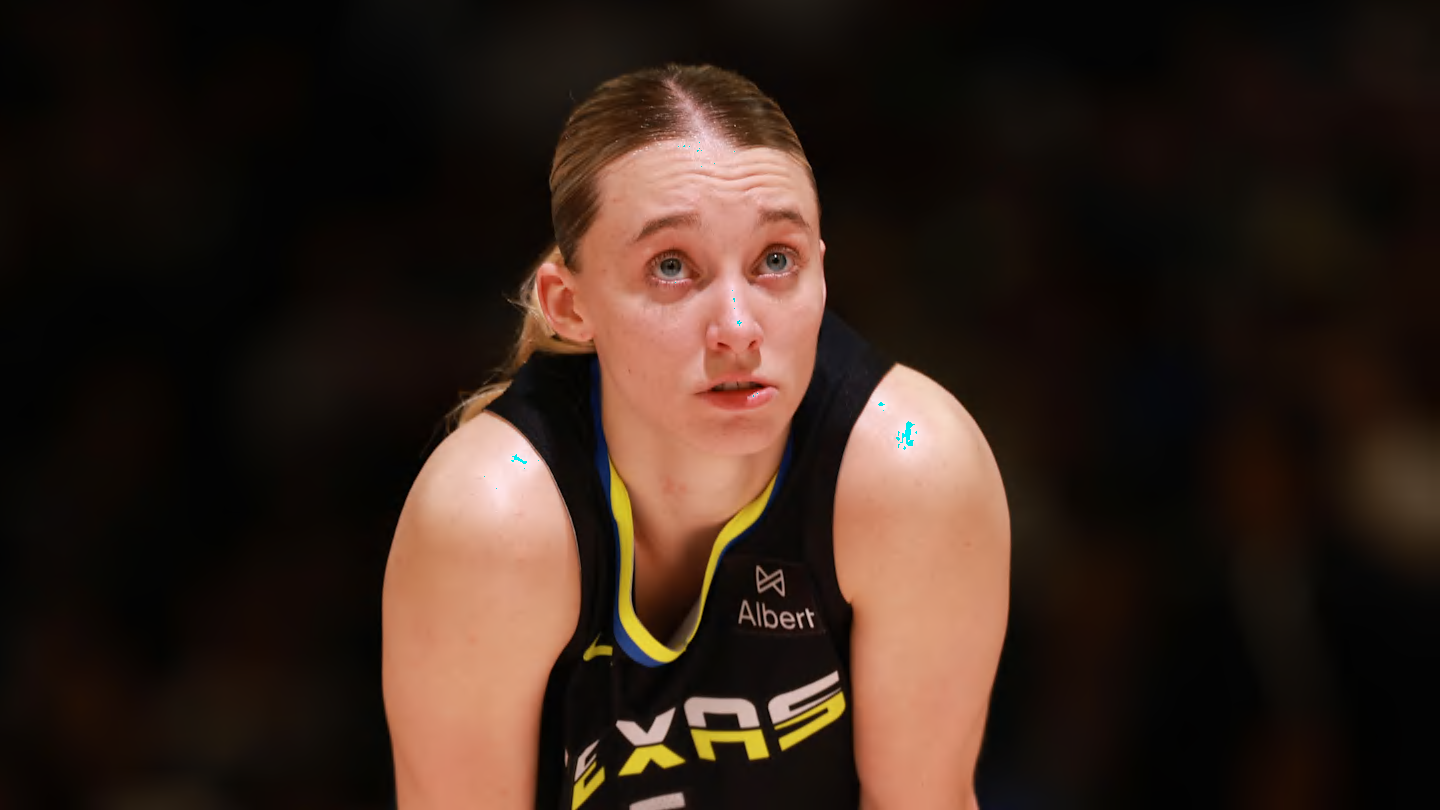
Paige Bueckers and Cameron Brink were asked about the current mood within the league during press interviews for Unrivaled on Monday, December 15. Bueckers, displaying leadership skills beyond her 24 years, took the opportunity to deliver a clear message: WNBA players need to stick together.
“I think unity is the best way to show strength,” Bueckers said. “So for us all to be together, for us all to be on the same page, for us to ask questions, for us to understand what we stand for and the people before us who paved the way, and what we want the next generation to have… having those conversations (is important).”
As she pointed out, it’s harder to have these kinds of conversations in the offseason, particularly because many players are historically scattered across the world. Leagues like Unrivaled allow players to stay closer to home, meaning it’s easier to facilitate discussions on topics.
But it’s deeper than that, Bueckers also said. “So for a lot of really strong women, being in one field and displaying that unity, it’s really important and it’s very unique in the sense that it doesn’t happen often. So we want to take full advantage of that.”
The latest WNBA CBA news isn’t exactly promising
Monday The Athletic reported that, among other issues, the WNBA and WNBPA are still no closer to reaching an agreement on revenue sharing and the salary cap. Players have asked for more than double the revenue share the league has offered so far.
The outlet also noted that the WNBPA previously proposed a deal that would have given players approximately 30% of league and team revenue. The league countered with an offer that would give players less than 15 percent of total revenue.
The Athletic also explains that the union’s latest proposal would determine the league’s salary cap “by taking players’ share of total revenue from the previous season, subtracting the cost of various player benefits and dividing that number by the number of teams.” These benefits include housing, health insurance and transportation. If signed, players would receive 29% of the previous season’s total revenue, and each year that percentage would increase by one point.
