

Momentum within the WNBA has never been higher, which is exactly why the delays seem stronger than ever.
As new stars push the league into its most visible era, the gap between promise and infrastructure becomes increasingly difficult to ignore. For the Dallas Wings, that gap widened further this week, even as expectations around the franchise continue to rise.
Advertisement
The uncomfortable truth surfaced when Greg Bibb confirmed that the Wings’ long-promised practice facility would not open as planned. Delay doesn’t just stall a construction project; it tests how seriously Dallas is willing to invest in women’s basketball at a pivotal time.
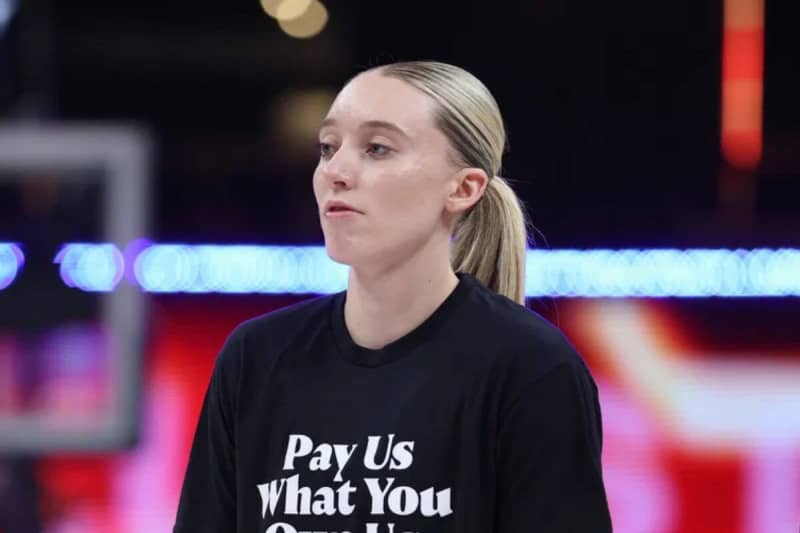
And that matters when your future is built around Paige Bueckers.
Bibb told the Dallas Morning News that the Wings’ $48.6 million practice facility, originally planned for spring 2026, is now expected to open in spring 2027. The delay also affects the team’s game day home, as renovations to Memorial Auditorium are now aligned with the same schedule.
“Obviously, I’m disappointed that we’re not ready to move into two facilities that we thought we were moving into when we signed the deal,” Bibb said.
Advertisement
The practice facility, a 70,700-square-foot complex with two full fields, locker rooms and performance spaces, was supposed to anchor the Wings’ move to Dallas proper. Instead, a project meant to signal permanence became another waiting game.
The change came after Dallas City Manager Kimberly Bizor Tolbert acknowledged that the city could not meet the original deadline, citing the amount of construction underway in the downtown convention center district.
On paper, the explanation is logistical. In context, it is symbolic.
Dallas is juggling massive projects, including convention center redevelopment, arena planning and a broader downtown overhaul. But as those priorities pile up, the Wings continue to operate under temporary conditions while the men’s franchises move forward with long-term visions.
Advertisement
Bibb was careful not to characterize the problem as negligence. “They have a lot to do right now with the construction of the convention center district,” he said, while emphasizing the value of the Wings in the city’s long-range plan.
Still, the contrast is hard to miss. As the NBA and NHL organizations explore a billion-dollar future, the Wings are asking for basic professional infrastructure and being told to wait another year.
This is the uncomfortable truth that Dallas must now acknowledge.
Taking control carries risks
In response, the Wings chose to take matters into their own hands.
Rather than relying on municipal deadlines, franchising evolved toward self-development of the practice center, giving the organization control of execution and exposure to cost overruns. It’s a calculated risk, but also a telling one.
Advertisement
Wings are effectively paying to prove they belong.
This approach mirrors what other successful WNBA franchises have done. Las Vegas’ decision to independently invest in elite facilities helped transform the Aces into a destination organization. Dallas is currently attempting a similar shift, but under tighter financial and political constraints.
The timing of this delay collides directly with the league’s broader power shift.
Bueckers, the No. 1 overall pick in the 2025 WNBA draft, arrived in Dallas as part of a generational wave that has reshaped the league’s profile. This wave now influences union negotiations, expectations and leverage.
Advertisement
ESPN analyst Alexa Philippou captured this shift while discussing the recent rise of the WNBA.
“The fanfare Clark received from the university carried over to the WNBA, which had a historic year in terms of attendance and viewership,” Philippou said. “Other college stars, like Angel Reese and, more recently, Paige Bueckers, have also brought significant followings to the league.”
She added that the 2024 WNBA Finals were the most watched in 25 years, proof that star power now translates directly into commercial impact.
This context matters. Actors enter CBA negotiations with unprecedented leverage. Facilities, salaries and long-term investments are no longer abstract ideals; these are basic expectations.

@dallaswings on Instagram
It’s not about whether Paige Bueckers leaves tomorrow. It’s about whether Dallas is building a future that elite players believe in.
Advertisement
The Wings are betting their own money to fill a credibility gap. The city is betting that patience will hold. And the league is watching how franchises react as women’s basketball enters its most profitable window yet.
The uncomfortable truth is not the delay itself.
That’s because in a league finally defined by momentum, waiting comes at a cost, and Dallas is now going through the schedule to prove it understands that reality.
The position Paige Bueckers’ Dallas Wings face uncomfortable truth as CEO addresses $48.6 million delay appeared first on EssentiallySport.
