

Co-drivers are less common in NASCAR. But what’s even rarer is that a monkey wins a race as co-driver! This is truly one of the times when you can’t invent the sport, when in 1953 a monkey was technically the winner of a race. And it also remains the only one to be up to date.
In the early years of the sport, the regulations did not include a specific rule against having your pet as a co-driver in the car. Although this seems like an extraordinary idea, one driver didn’t find it weird and made full use of it.
Advertisement
Jocko Flocko, the winning monkey of the NASCAR race
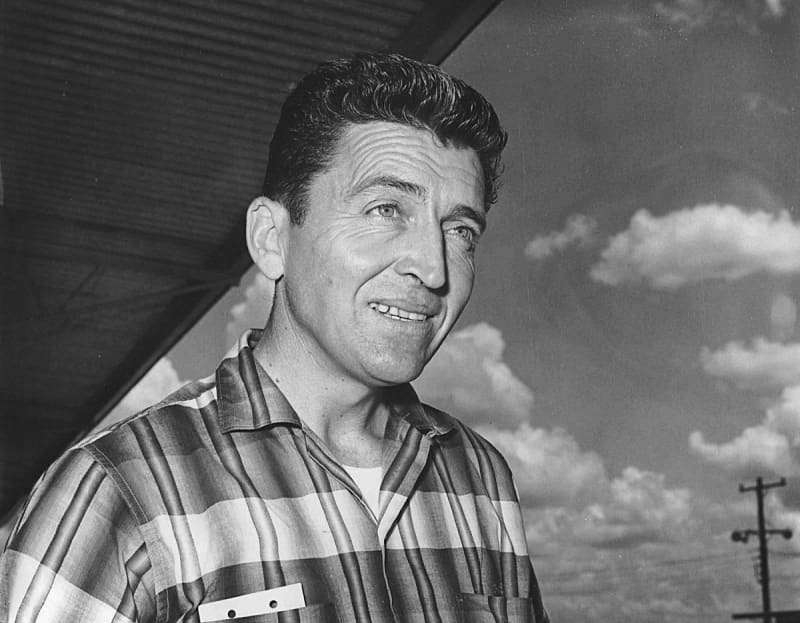
Tim Flocking was one of the oldest and most proven NASCAR drivers, having raced since 1949. He won several races before entering the 1953 season, when his crew thought of an incredible publicity stunt. They had a real monkey on his side for eight races that season.
Jocko Flocko, a rhesus monkey, was his co-pilot. Compared to regular monkeys, rhesus monkeys are more intelligent and adaptable. They tolerate stress better. They can also handle noisy environments, crowds, and confinement better, which is why Jocko Flocko could handle the NASCAR spotlight.
Jocko Flocko’s primate instincts caught the public’s attention and he became the garage star. At one point, many would attend the races just to see him sit next to Tim Flock and finish competitively. However, 1953 also proved to be a poor season for Flock, as he won half as many races as the previous season.
Advertisement
That’s when they raced at Hickory Motor Speedway on May 16, and he scored the only victory of his season. Yet the most exciting factor was not him but his co-driver, Jocko Flocko. While he wasn’t driving, sitting in the car as co-driver gave him the privilege of being the only winning ape in NASCAR history 73 years ago. This also made the Hudson #91 very popular.
This victory was Flock’s last in the No. 91. After that he changed sides but continued racing and enjoyed championship success in 1955.
However, in recent years the sport has evolved. NASCAR currently doesn’t look like it did back then, with major overhauls to safety and competitiveness. The regulations therefore do not authorize co-pilots, and especially not animals.
Advertisement
This is also due to animal rights, which were not very important at the time. But there is also a completely different safety aspect, which also put an end to Jocko Flocko’s involvement in racing.
Why did Jocko Flocko stop running races?
A monkey sitting in the co-pilot’s seat looks rather goofy and cute. But ultimately the monkey has to be in the seat to keep it that way. But it seemed like Jocko Flocko had discovered free will, and after seeing Tim Flock open the car hatch throughout the races, Flocko did too. That’s where the trouble started.

Tim Flock and his monkey co-pilot Jocko Flocko (@DanTorsiello)
“Back then, cars had a hatch that we could open with a chain to check our tires for wear. Well, during the Raleigh 300, Jocko got out of his seat and stuck his head through the hatch, and he went berserk!”
Advertisement
“Look, it was hard enough driving those heavy old cars back then under normal circumstances, but with a crazy monkey clawing at you at the same time, it becomes almost impossible!” Flock said in a later interview.
“I had to go back to the pits to throw him out and ended up third. The pit stop cost me second place and a $600.00 difference in my salary. Jocko retired immediately. I had to get rid of that monkey!”
Although this cost him dearly, it also ensured that in the future no more monkeys would be found alongside drivers. For this reason, Jocko Flocko remains the only monkey to ever race a NASCAR event; what’s more, I managed to win one.
The position NASCAR’s Most Incredible Moment: The Time a Monkey Won a Race 73 Years Ago appeared first on EssentiallySport.
