

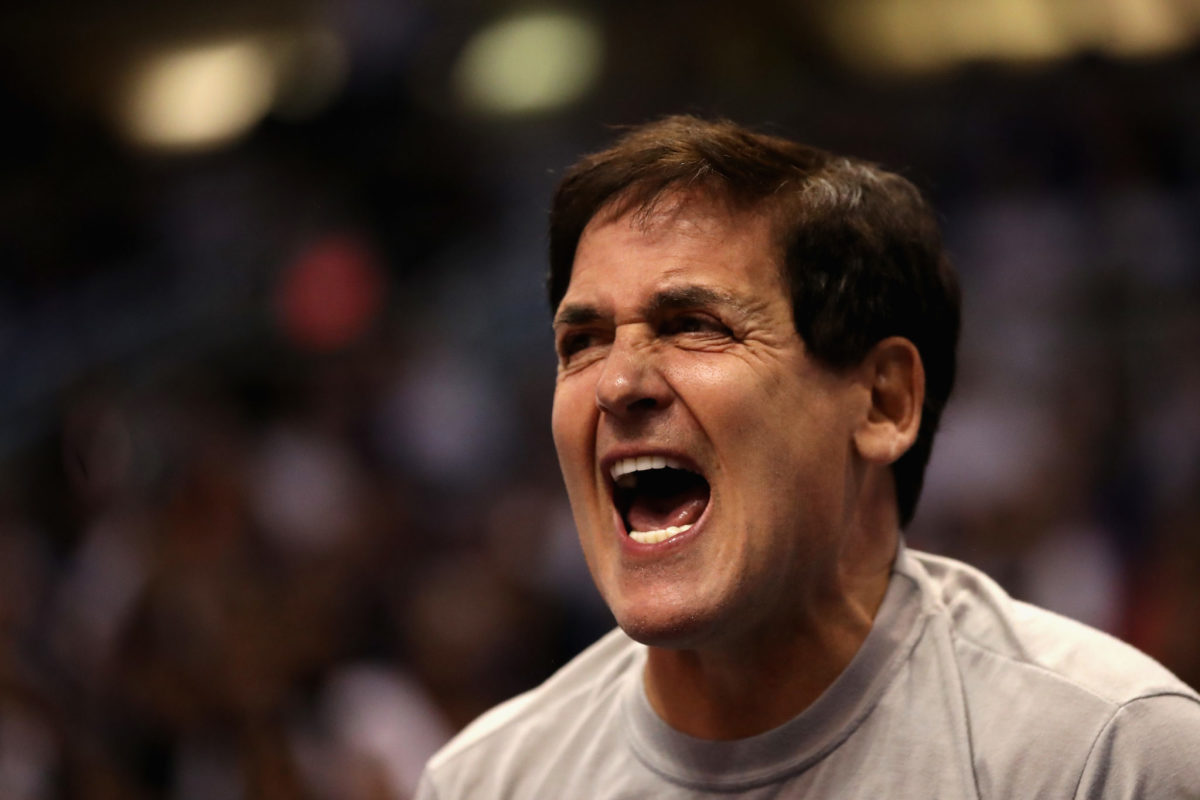
THE WNBA He appears no closer to reaching agreement on a new collective bargaining agreement with the players than he did several months ago. With a lockout looming, billionaire basketball fan Mark Cuban has some ideas about why things aren’t moving forward.
Speaking to
Advertisement
Cuban posted a very long message explaining that his big idea would be to let “NIL” help subsidize players’ contracts the same way college teams currently do.
“The crazy thing is, no matter what the WNBA does with salaries, every star college player will take a pay cut to play in the WNBA. I asked a few ADs what the going rate was for the star player of a power conference WBB team – $500,000 to $1.2 million. And you’re still a free agent with the portal. You get paid for your room and board. And you can get a good education if you work there. Everything is subsidized by donors and the shared school Which makes it closer to Europe, where companies subsidize the teams, than to the WNBA. NBAa team cannot go to a sponsor and negotiate a direct payment agreement for a player. In college, they actually can with zero money. When I wrote checks to IU, I knew which players were trying to get money (although I never tie money to specific players. It’s up to them). The WNBA should consider allowing the same thing. Let teams approach local sponsors and settle payments to players as part of sponsorship packages. The big players have agents to do this. The rest represents minimal amounts. With or without an agent.
Let WNBA teams pay their players “NIL” money. This is counterintuitive to NBA people, but here’s the thing. WNBA teams don’t have the dollar margin from tickets, sponsorships and shared revenue like television to pay higher salaries using their own cash flow. With the league’s help, they could create NIL deals with sponsors that would speak directly to players. From the sponsors. Make it legal. Create a cap per player, based on years of experience.
Advertisement
Yes, some teams will suck, that’s where the wnba steps in to help. They will also suck at it for a while. But as with collegiate NIL, sponsorship programs will supplement player salaries without harming the economics of the teams and the league itself. The next question will concern competitive balance issues. Large markets can do better. They have a large addressable market for sponsors. The wnba could require that a certain percentage of NIL financial transactions be paid into a pool for a version of revenue sharing. This is indeed what is happening (or has happened) with swimsuit ads. I remember advocating that jersey ads be shared among all teams, because the greatest value for sponsors comes not from television or local games, but from national television, playoffs and jersey sales. It would be similar. Obviously I’m just spitting this out, but if they came on Shark Tank this is what I would suggest!,” Cuban wrote.
The fatal flaw
Basketball fans were quick to point out that the major flaw in the Cuban model is that it shows the WNBA is not viable on its own. This would also prove difficult because it would open the door to a ton of bad actors like college sports has had for years.
Advertisement
“Won’t work with the WNBA, it’s not comparable. College? Works great: because the college itself has fans that the teams support. You don’t give money to the player, you give money to the team to get the player. You support your team. WNBA teams have no support to fall back on. Sounds good in theory, but totally non-starter in practice,” one user responded.
“The problem is that the reason ‘NIL’ (i.e. pay to play) works is that many people, including billionaires, really care about their alma mater. Not so much about their local WNBA team. There’s nothing stopping players from getting a legitimate NIL. Caitlin Clark has no problem,” wrote another.

INDIANAPOLIS, IN – JUNE 14: Caitlin Clark #22 of the Indiana Fever celebrates during the game against the New York Liberty in a 2025 Commissioner’s Cup game on June 14, 2025 at Gainbridge Fieldhouse in Indianapolis, Indiana. (Photo by AJ Mast/NBAE via Getty Images)A.J. Mast/Getty Images
(AJ Mast/Getty Images)
“If a professional league has to copy donor-funded college payments to raise salaries, it quietly proves that the business still can’t fund its own value and survives more on subsidies than actual market demand,” wrote a third.
Advertisement
However, something must be done – and quickly. If the WNBA finds itself locked out and not playing at all in 2026, it could mean the end of the organization as we know it.
This story was originally published by The yarn on February 19, 2026, where he first appeared in the WNBA section. Add The Spun as Favorite source by clicking here.
