

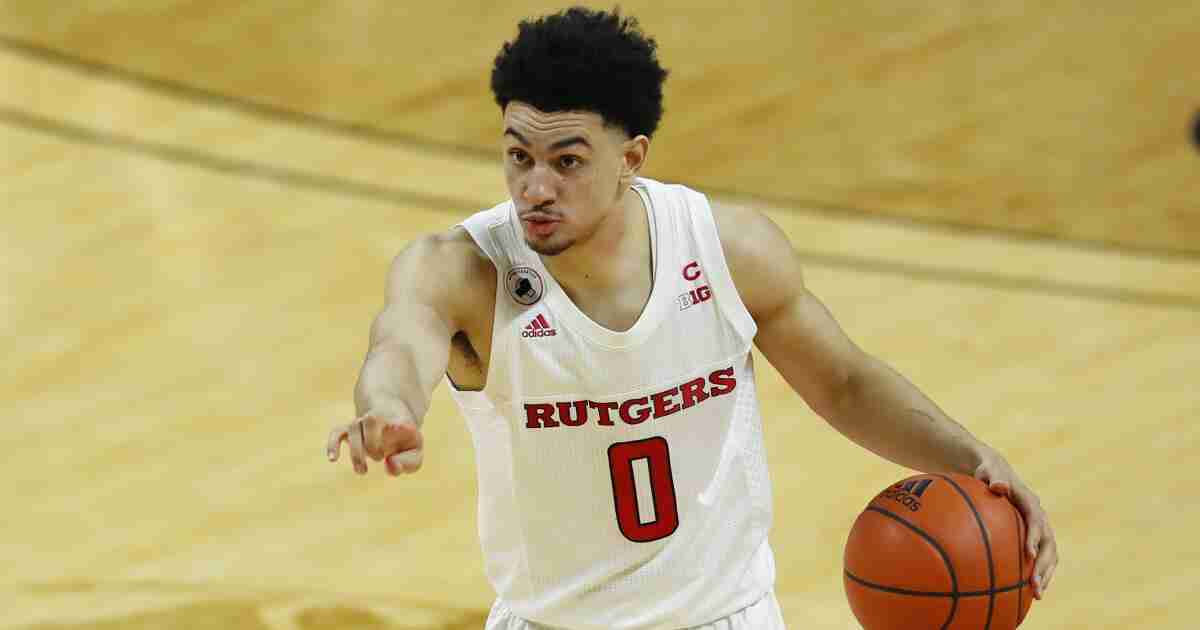
The latest movement in the fight for college athletes’ rights began with intrigue Wednesday on the eve of the NCAA men’s basketball tournament with a tweet from Rutgers guard Geo Baker and the hashtag #NotNCAAProperty.
At the end of the night, Ramogi Huma, former UCLA football player and executive director of the National College Players Association (NCPA), issued a call to action from players from 15 of the 68 teams gathered in Indianapolis to the start of March Madness.
Under the headline “College Basketball Players Launch March Madness Protest,” the athletes demanded: changes to NCAA rules that allow them to ensure representation and profit from the use of their names, of their image and likeness by July 1; a meeting with NCAA President Mark Emmert; meetings with state and federal lawmakers and President Joe Biden as they seek “physical, academic and financial protections”; and a decision of the Supreme Court in Alston v. NCAA to support college athletes who no longer have limits to their earning power.
A missing element in the press release: an answer to the question “or what?”
Of course, that reveal could come as soon as Thursday, when the tournament begins with the first four matches. On Friday, the first round begins with the traditional 16 matches, followed by another 16 on Saturday.
“The NCAA too often treats college athletes like dollar signs rather than people,” the statement said. “College basketball players from multiple teams protesting NCAA rules during the NCAA March Madness tournament is unprecedented and comes at a time when lawmakers and the U.S. Supreme Court will make decisions that will affect the freedoms and rights of generations of future athletes. »
The #NotNCAAProperty movement began over the summer, according to the release, when Baker, Iowa’s Jordan Bohannon and Michigan’s Isaiah Livers hosted a Zoom meeting with players from the Big Ten and Huma. Discussions focused on security challenges presented by the COVID-19 pandemic.
Over the summer, NCAA leaders said college sports would not lock athletes in a bubble like the NBA did to finish its season, saying college sports are not professional sports . But, seeing no other option as new COVID-19 cases led to the cancellation of some games all season, the NCAA decided to move the entire men’s basketball tournament to Indianapolis, where it would create a makeshift bubble to keep teams relatively COVID-free and playing. games that would bring schools $800 million in television revenue.
Now in Indy, the players met Tuesday evening and decided to launch their protest.
Baker led the charge, tweeting: “The NCAA OWNS my image and likeness. A person receiving a music grant can enjoy an album. A person benefiting from a university scholarship can benefit from a tutor service. For the people who say “one athletic scholarship is enough.” Nothing less than equal rights is ever enough. I am #NotNCAAProperty.
Baker’s teammate Ron Harper Jr. later tweeted: “HEAR US!! We deserve the rights to OUR names. #NotNCAAProperty”
Jordan Bohannon, another Big Ten guard from Iowa, followed the Scarlet Knights, tweeting: “It’s been way too long. It is time for our voices to be heard. #NotNCAAProperty.
Michigan forward Isaiah Livers also joined us.
Under pressure from dozens of states passing and introducing laws allowing players to profit from the use of their name, image and likeness, the NCAA has spent the last 18 months building rosters and having conversations on the subject, but without making changes to the rules. The association had said it would vote on the NIL rules in January before delaying the vote while continuing to work on a federal solution with Congress, which shifted to a Democratic majority days before the delay was announced.
The College Athlete Rights Movement has grown this year as players were asked to compete for their schools during a pandemic. Pac-12 football players came together under #We are unitedalso with the help of Huma, originally from Southern California, made requests to the league office so that they could play the season.
