

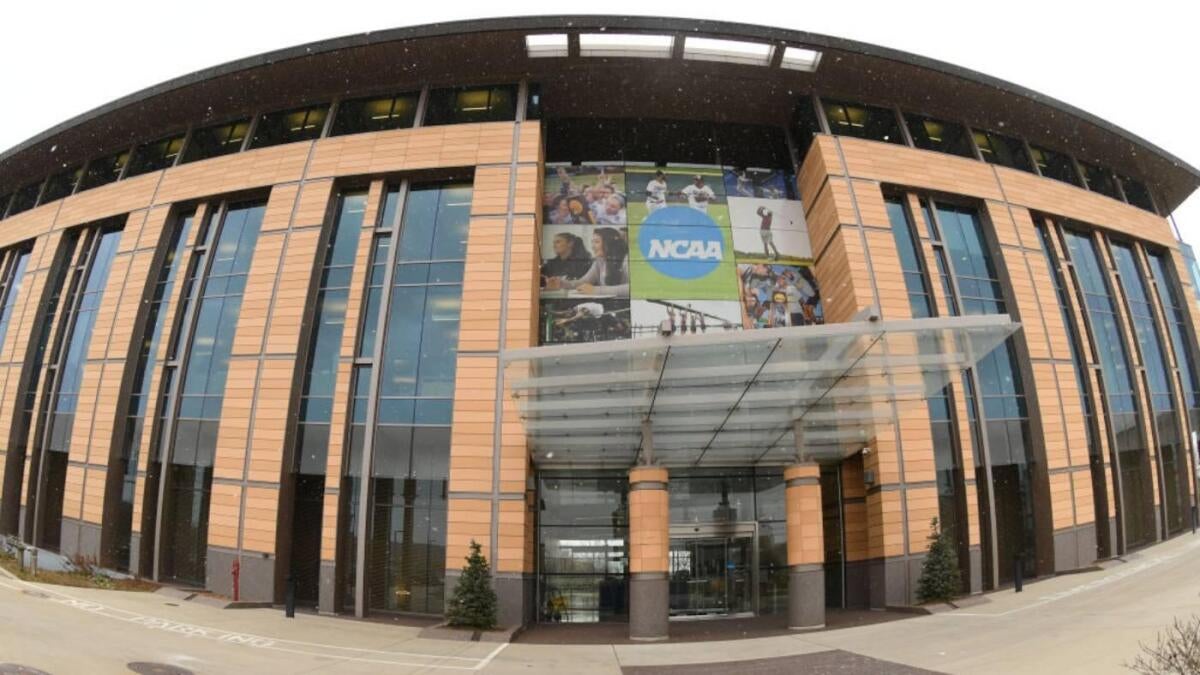
The NCAA’s 119-year-old model of amateurism died Friday under a judge’s pen as the landmark antitrust settlement House v. NCAA received final approval, opening the door to sharing millions of dollars between schools and players for the first time.
U.S. District Judge Claudia Wilken gave final approval to the landmark settlement after five years of litigation, ending with nearly a year of discussions and adjustments after the NCAA and power conferences initially voted to settle the lawsuit in 2024. The $2.8 billion settlement over 10 years will pay former players for missed name, image and likeness opportunities and allow colleges to directly pay current players starting July 1.
NCAA President Charlie Baker wrote a letter in response to this historic settlement.
“By approving the agreement reached by the NCAA, the defendant conferences and the student-athletes in the settlement paves the way for the stabilization of college sports,” Baker wrote. “This new framework that allows schools to offer direct financial benefits to student-athletes and establishes clear and specific rules to regulate NIL agreements with third parties marks a huge step forward for college sports.”
Schools can share up to $20.5 million of their revenue with players during the next academic year. The settlement also includes $2.8 billion in back payments for athletes who competed between 2016 and 2024. The new revenue sharing cap will increase by at least 4% each year for the life of the 10-year agreement.
Final approval of the House deal was delayed twice in April after the judge echoed opponents’ concerns about imposing limits on current players, one of the pillars of the deal. Schools cut players from rosters in the spring even though the settlement had not yet been approved, complicating discussions at settlement hearings. The judge asked lawyers to come up with a plan that would allow current players to be “grandfathered in” with the new roster limits. The NCAA, the power conferences and the plaintiffs in the lawsuit instead offered a compromise: Schools have the option to keep current players on their rosters and temporarily exceed the new limits until their eligibility expires.
The new roster limits are expected to lead to the removal of nearly 5,000 athletes from teams in the 43 sports sponsored by the NCAA. Some sports will increase enrollment limits compared to previous years, but many will be reduced despite offering unlimited scholarships under these new thresholds. Football rosters will be reduced to 105 players, resulting in schools cutting more than 20 players, although most schools are expected to exceed those limits by grandfathering current athletes.
The House v. NCAA antitrust class action lawsuit was filed in 2020 by Arizona State swimmer Grant House and college basketball player Sedona Prince seeking an injunction against the NCAA and Power Five conferences. It sought to lift restrictions on revenue sharing from media rights. Powerful antitrust attorneys Steve Berman and Jeffrey Kessler represented the plaintiffs.
The settlement resolved three antitrust suits: Carter v. NCAA, House v. NCAA, and Hubbard v. NCAA.
NCAA rules have long prohibited players from cashing out their NIL, but that changed on July 1, 2021 when the organization began allowing players to earn money from third parties and collectives. The House rule will, for the first time, allow schools to pay players directly.
How schools plan to distribute up to $20.5 million among their sports is a point of contention, with no legal framework to follow. Most schools are expected to adopt the backpay formula outlined in the $2.8 billion settlement. This means that approximately 75% of future revenue will be shared with football players, 15% with men’s basketball, 5% with women’s basketball and 5% with all other sports. Some schools have chosen to reflect the average gross revenues of each sport, which could lead to more than 85% of payroll being reserved for football players.
It is unclear how revenue sharing will affect the surge in third-party NIL transactions. However, agreements with third parties and collectives outside of the revenue sharing plan will soon face scrutiny from a new entity charged with enforcing the rules starting July 1. Experts believe this will help curb “pay-to-play” systems between boosters and players well beyond perceived market values. Numerous multimillion-dollar deals with high-profile players were made in the months before the House approved the settlement so that those deals would not be reviewed by the law enforcement entity, which won’t have authority until July 1.
The power conferences are expected to soon announce the creation of the College Sports Commission, an organization charged with overseeing the terms of the agreement and enforcing the new rules. The power conferences have hired Deloitte and LBI, major players in professional sports revenue management, to develop software to analyze NIL deals and track player revenue sharing contracts. The CSC will monitor NIL transactions over $600 with a new clearinghouse called “NIL Go,” sources told CBS Sports. Deloitte will use data from sponsorship deals with athletes to review boosters’ NIL deals and determine whether a deal exceeds an athlete’s fair market value.
Schools’ revenue sharing payments will be monitored by a monitoring body called ‘CAP’, sources said.
Reviewed NIL transactions will be subject to an arbitration process, which could speed up decisions on eligibility and sanctions under the new system. The NCAA, which had become powerless in enforcing NIL agreements because it was legally challenged from state to state, will not be directly involved in enforcing NIL agreements.
“I certainly think it’s something that we’re going to have to work on in a coordinated way, but on some level … this could be a really good way — and there’s an adjudication process, and he can investigate the facts,” NCAA President Charlie Baker said last week. “There’s a lot to like about it.”
Schools are expected to pay Deloitte between $5,000 and $500,000 for the software, according to documents shared with athletic departments last week.
The commissioners of the power conference react
The newly formed CSC issued a statement shortly after the settlement was finalized, with remarks from all commissioners of the power conference.
“This is an important moment for college sports that will provide unprecedented opportunities for student-athletes,” said ACC Commissioner Jim Phillips. “We look forward to implementing this new system that provides much-needed transparency and structure to create a more sustainable model for the long-term future of college athletics.”
“We look forward to implementing this historic agreement designed to bring stability, integrity and competitive balance to college sports while increasing scholarship and earning opportunities for student-athletes across all sports,” said Big Ten Commissioner Tony Petitti.
“As we enter this new era of college athletics, it is crucial that we do so with structure, transparency and student-athlete success in mind – this agreement and new model will ensure that happens,” said Big 12 Commissioner Brett Yormark. “I look forward to working alongside my colleagues to implement this new system that prioritizes equity and opportunity for all student-athletes and institutions.”
“It’s a new day for college athletics,” Pac-12 Commissioner Teresa Gould said. “This historic moment allows us to maintain what makes college sports special – youth development through sport – while evolving to meet today’s student-athletes where they are and provide them with new opportunities in a way that provides long-term stability for collegiate athletics.” I am proud to work alongside my colleagues as we implement and usher in the future of college athletics.
“The House’s approval of the settlement agreement represents an important milestone in meaningfully supporting our student-athletes and a critical step toward establishing long-term sustainability for college sports, two of the Southeastern Conference’s top priorities,” said SEC Commissioner Greg Sankey. “As the journey to modernize college athletics continues, we remain focused on identifying and implementing innovative opportunities for our student-athletes across all sports, while maintaining the core values that give collegiate athletics unique meaning.”
