

Greg Biffle came to NASCAR in the late 1990s, at a time when the league was awash in larger-than-life personalities. You know the appeal.
Any remembrance of the greatest names and legends probably wouldn’t include the solid racer from the Pacific Northwest, who was part of the mini-wave of Western racers who came our way in that era – Mike Skinner, Derrike Cope, Kevin Harvick, Kasey Kahne, Kurt Busch, Ron Hornaday, etc.
Advertisement
He was neither Wallace, nor Gordon, nor Jarrett, nor, God knows, Earnhardt. But damn if he wasn’t always therein the best possible way.

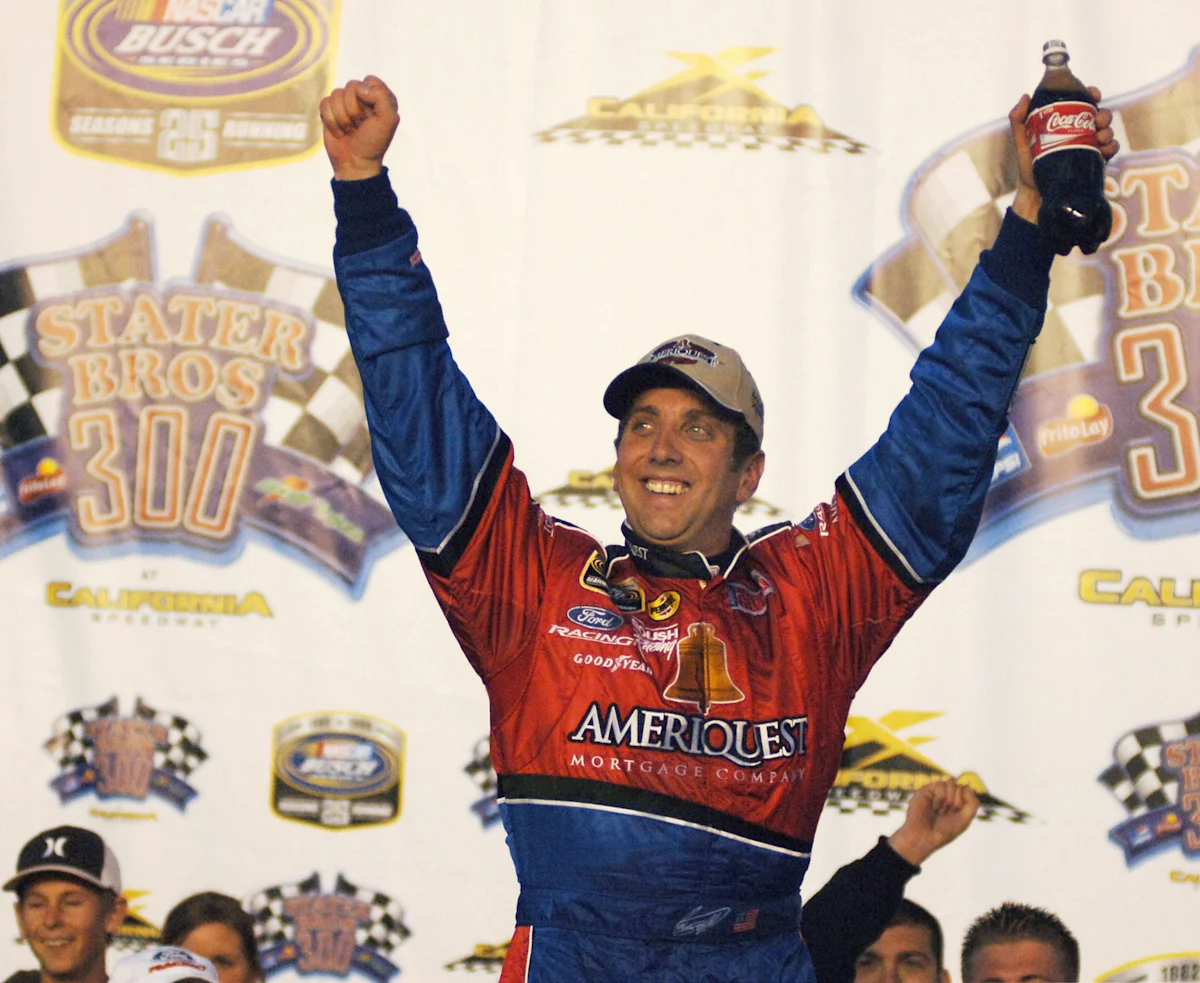
Greg Biffle after a 2006 win at Fontana, one of his 56 combined victories in NASCAR’s top three national series.
Thousands of runners have come and gone without ever being thereamong the fast traffic, sometimes the fastest traffic, and 19 times in 14 full-time Cup Series seasons, ahead of them all in checkers.
With racers like Mark Martin and Carl Edwards as Roush Racing teammates for much of his career, he was never the biggest star on his own team, much less one of the true power players in the sport as a whole. Perhaps his most high-profile days came before he was a Cup Series regular, when he and Harvick sparked a short but eventful feud in the old Busch Series.
Advertisement
But he spent more than a decade collecting his mail in the top 10, sometimes at Victory Lane, because unlike so many quality racers whose names you’ve never heard, he was able to enjoy that often elusive moment at the right time and place in his young life.
Greg Biffle took advantage of the old NASCAR winter series
It was called the Winter Heat Series, a NASCAR product at Tucson Speedway in the late ’90s, designed to provide programming for NASCAR’s television partner, TNN. When Biffle wasn’t racing there, he was back near home in Washington, racing on a short oval in Portland, across the Columbia River from his hometown of Vancouver.
“You could tell he loved racing,” says Dennis Huth, a former top NASCAR executive who ran the Portland track and assisted Winter Heat at the time. “Every time he ran a race, if he didn’t finish near the top, you could tell he was disappointed. But I guess that’s the case with all runners.
Advertisement
“Benny Parsons was doing TV for Winter Heat and he and I had lunch one day. He told me he knew a few NASCAR owners looking for talent, and we started making a list. Biffle was one of them, and I think Benny went to Jack Roush and said he should take a look at him.”
In less than a decade, Biffle has become a NASCAR name, if not a household word. Of the thousands of racers who have strapped themselves to a big-league stock car, only 44 have collected more than Biffle’s 19 career victories, a total he shares with Fonty Flock and two Hall of Famers – Buddy Baker and Davey Allison.
Biffle was a NASCAR champion, having won the title in Trucks (2000) and formerly named Busch Series (2002). His best run in the Cup Series was a runner-up finish in the championship in 2005, when he enjoyed the best short-term success of his career – five wins in the first 15 races of the season.
Advertisement
He won the season finale at Homestead three years in a row (2004-06), but that was before the finale was a championship winner among the top four drivers in the playoffs. Bad timing, in this case.
It’s true, Harvick has tried to choke Biffle before, and there was a time when an angry Sterling Marlin called him a “bug-eyed dummy,” but if those are the only two collisions you remember from a NASCAR career that spans two decades, almost any driver would accept it.
Greg Biffle’s post-hurricane relief efforts earned him a lot of love and respect.
Towards the end – and much will rightly be made of this – Greg Biffle’s highest level of adulation is due to something much bigger than a Sunday race. Last fall he made his way to the western Carolinas following Hurricane Heleneat a time when the federal response was heavily criticized.
He was constantly flying back and forth with his helicopter, delivering supplies to people in need. People in need. No, he didn’t do it without fanfare, as he took to social media to give visuals to his effort. But we never thought that these visuals were anything other than letting us know the needs that needed to be met.
Advertisement
During his racing career, he was what you might call a “tween.” Not the fan favorite whose name adorned the marquee, but certainly not the villain. But like I said before, he was still there.
And when it really mattered, more than ever at Daytona, Darlington or Dover, he was there in a big way. His moments of glory came from something bigger than a checkered flag, and that’s not a bad legacy at all.
— Email Ken Willis at [email protected]
This article originally appeared in the Daytona Beach News-Journal: NASCAR driver Greg Biffle delivered when needed after a solid career
