

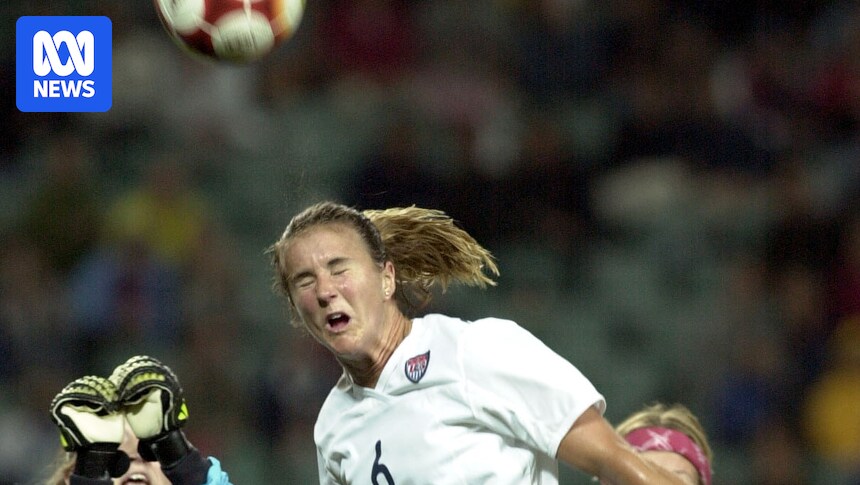
Former US women’s soccer star Brandi Chastain said she plans to donate her brain when she dies, to help research into head injuries in the sport.
Chastain, 42, famous for her memorable celebration of the game-winning penalty that helped the United States win the 1999 Women’s World Cup, said she hoped her donation would “change things in a positive way.”
“I hope that my experience in football and what I am able to give back will help put football in a better place than it was when I started,” Chastain said in a statement posted on the Concussion Legacy Foundation website.
“I’ve played soccer since I was little, I can’t even guess how many times I’ve headed the ball,” Chastain added. “That’s a significant number.
“It’s scary to think about all the concussions and potentials that have never been diagnosed in my life, but it’s better to know.”
Chronic traumatic encephalopathy, or CTE, is closely linked to the repeated head trauma commonly encountered in contact sports and can lead to aggression and dementia.
Chastain, who made the last of her 192 appearances with the U.S. national team in 2004, is the latest in a growing list of current and former athletes who have agreed to donate their brains after their deaths.
A high incidence of degenerative brain diseases among former professional American football players has led thousands of National Football League alumni to lobby for a settlement that could cost the league $US1 billion ($1.36 billion).
Chastain has been an advocate for Safer Soccer, the campaign that aims to end the introduction of headings in youth soccer through high school.
In December, the U.S. Soccer Federation announced a ban on headers for children ages 10 and younger as part of a new safety campaign aimed at eliminating concussions and other injuries.
The new safety guidelines also limit the number of headers in training for players aged 11 to 13 to no more than 30 minutes per week, with only 15 to 20 headers per player and emphasis placed on technique to avoid injury.
AFP/Reuters
