

As the coronavirus pandemic continues to have a global impact, a battle is unfolding within one of the world’s major sports.
On one side of the net is current men’s tennis world number one and president of the ATP Players Council, Novak Djokovic, who is pushing for a proposed fight fund to help lower-ranked professionals on tour keep their heads above water.
“The majority of players ranked between 200, 250 in the world and 700th or 1,000th (ranked player) do not have (national) federation support, do not have sponsors,” Djokovic said.
“They are completely independent and left alone.”
Djokovic and other top players, such as Rafael Nadal and Roger Federer, hypothesize that without an active lower level, the elite of men’s tennis will suffer over time.
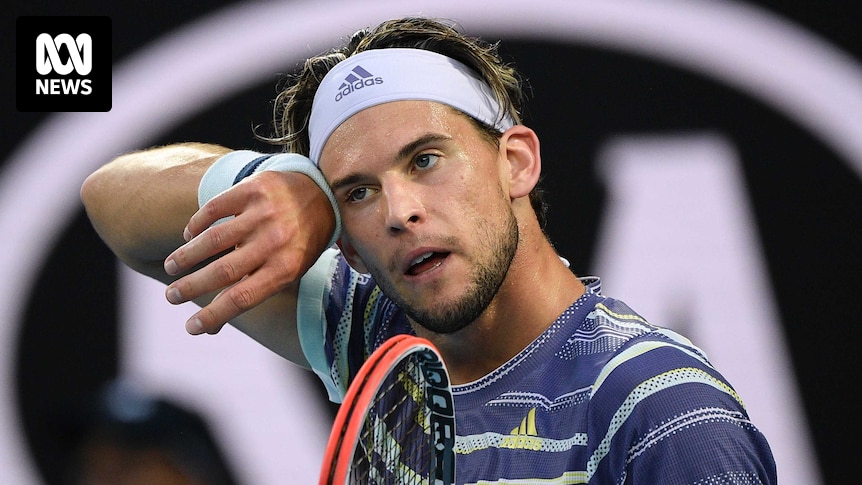
Djokovic and his illustrious colleagues are opposed by the male world number three and robust individualist, Dominic Thiem, who believes that any gambler who struggles to make a living has only himself to blame.
“There are many, many players who do not put sport above everything else and do not live professionally,” Thiem told Austrian newspaper Krone.
“I don’t really see why I should give money to such players. None of us top players received anything, we all had to fight to progress.“
Unlike many professional sports, tennis players operate primarily as independent contractors. There is no negotiated minimum wage and no one to cover the essential expenses necessary for daily survival.
Time spent off the field represents money out of their pockets. Injured tennis players often try to recover quickly from their ailments to ensure they continue to receive money.
With the sporting world largely in lockdown due to the coronavirus, no elite players are currently taking to the field. In the lower ranks, players fall below the poverty line.
In 2014, the International Tennis Federation commissioned a study that suggested the average player cost for a professional player ranked between 101 and 250 in the world (without support staff and taxes) for a single season was $71,371.
About 95 percent of all professional tennis players surveyed at that time said their prize money did not cover their expenses.
A more inclusive approach suggests that around $250,000 is needed to support a mid-level player and their support staff on tour for a year.
That means about 200 top players on the ATP and WTA tours make enough to adequately support themselves each year, and another 100 or so can get by by taking shortcuts and living cheaply.
Given that there are approximately 3,500 male and female professional players, this means that most players lose money playing tennis.
Australian O’Connell earns his living
A perfect case study is that of Australian journeyman Chris O’Connell.
During his tennis career, O’Connell quit to keep his dream alive: selling clothes, washing boats and evading border controls. It finally paid off last year.
No player has played or won more professional matches than O’Connell in 2019, accumulating 82 victories across the world.
According to O’Connell, he spent $90,000 on tour to travel as cheaply as possible. The 82 wins during the year moved him up the rankings to 114th in the world, earning him approximately $106,027 in prize money.
This allowed O’Connell to make a profit of approximately $16,000.
O’Connell was able to take home about as much prize money as the 227th highest-paid golfer on the US PGA Tour, a figure roughly the same amount of money as the 670th highest-paid AFL player takes home.
Both Djokovic and Thiem have earned more than 100 times what O’Connell was able to earn.
O’Connell’s success on the small stage in 2019, however, has allowed him to earn more money on tour this year than last year, despite not winning a match on the ATP Tour this season.
This is largely due to his lucrative first round loss at the Australian Open.
Participations in Grand Slam tournaments are the financial lifeline of all tennis players, where they earn a lot of money. Last year, Australian Priscilla Hon earned around $485,000 in singles play on the WTA Tour, competing in tournaments in places such as ‘s-Hertogenbosch and Hiroshima.
Of that $485,000, about $350,000 came from Grand Slam tournaments, where she won only one main draw match.
Hon won more losing in the second round of qualifying at Wimbledon last year than at any non-Grand Slam event.
For players stuck on the fringes of qualifying for Grand Slam tournaments (with a ranking around 220 worldwide), they are forced to travel to remote locations where they risk losing money and potentially gaining valuable ranking points to get to the big stage.
Ultimately, both Djokovic and Thiem have valid points to some extent.
For Djokovic, ensuring the game’s growth is for the common good, as is minimizing the real financial harm some of his colleagues are currently feeling.
For Thiem, the prospect of taking away money he has rightfully earned could be painful and go to the heart of natural justice.
The Austrian must recognize, however, that the worst performing players are not necessarily unprofessional, but may be less talented to begin with, or at least not as talented now.
Perhaps the best answer is that the system has been broken for a long time and almost all global sports are at a standstill (Belarusian football excluded) could be an ideal opportunity to fix broken and outdated financial models across all sports.
Loading…
