

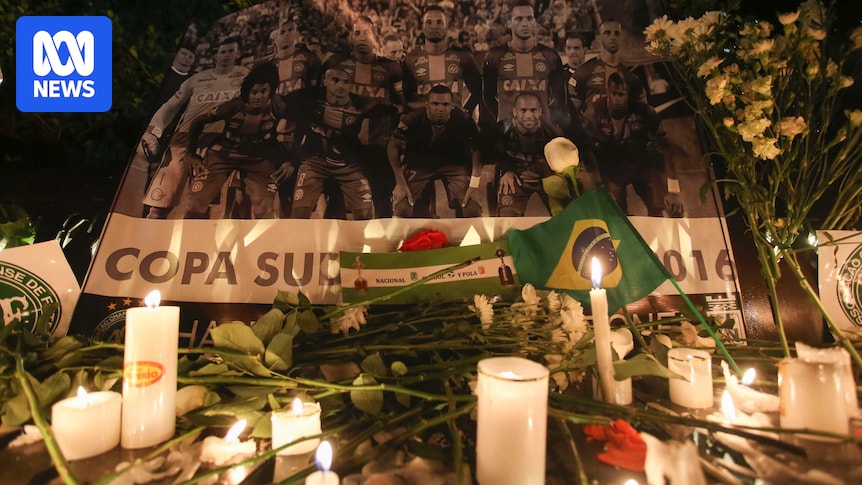
The plane that crashed in Colombia, killing 71 people, including most of a Brazilian soccer team, was out of fuel at the time of impact, according to initial findings by aviation officials, prompting an investigation into why the plane flew in those conditions.
Key points:
- Authorities confirm that the plane “was out of fuel at the time of impact.”
- Flight regulations require planes to carry enough fuel for 30 minutes longer than necessary.
- An official said refueling was at the pilot’s discretion, prompting an investigation into why he did not do so.
Late comments from the civil aviation authority confirmed the last words of Bolivian pilot Miguel Quiroga at the control tower at Medellin airport to crackling sound obtained by Colombian media.
“When we arrived at the scene of the accident and were able to inspect the remains, we were able to confirm that the plane was out of fuel at the time of impact,” said Freddy Bonilla, secretary of aviation safety for the Colombian aviation authority.
said.
A recording of the pilot’s last words can be heard saying to the control tower the plane was “totally down, totally out of power, out of fuel” – he urgently requested permission to land before the sound died down.
The BAe 146, manufactured by BAE Systems Plc, then slammed into the side of a mountain near the town of La Union, outside Medellin.
Only six people on board the LAMIA Bolivia charter flight survived, including three members of the Chapecoense soccer team en route to the Copa Sudamericana final, the biggest match in its history, a journalist and two crew members.
International airline regulations require planes to carry enough reserve fuel to be able to fly for 30 minutes after reaching their destination in case they need to circle before landing or flying to another airport.
“In this case, unfortunately, the plane did not have enough fuel to meet emergency regulations,” Bonilla said in Medellin.
“One of the theories we are working on is that not having found fuel at the crash site or in the fuel tubes, the plane went down due to lack of fuel.”
Refueling is at the discretion of the pilot: official
Loading…
LAMIA Chief Executive Gustavo Vargas said Wednesday that it was at the pilot’s discretion to refuel en route, adding that the plane should have enough fuel for about four and a half hours, give or take depending on weather conditions.
“The weather conditions influence a lot, but he had alternatives in Bogota in case of fuel shortage,” Mr. Vargas told reporters in Santa Cruz, Bolivia.
“He had all the power to go and refuel. It’s a decision the pilot makes.“
Mr. Bonilla said weather conditions in Medellin at the time were optimal for a successful landing.
Some also wonder why Chapecoense used a charter company rather than a commercial airline.
Brazilian investigators joined their Colombian counterparts to check two black boxes located at the crash site, on a muddy hillside in the forested highlands near La Union.
The plane crashed in Medellin, central Colombia. (Google Maps)
Reuters
