

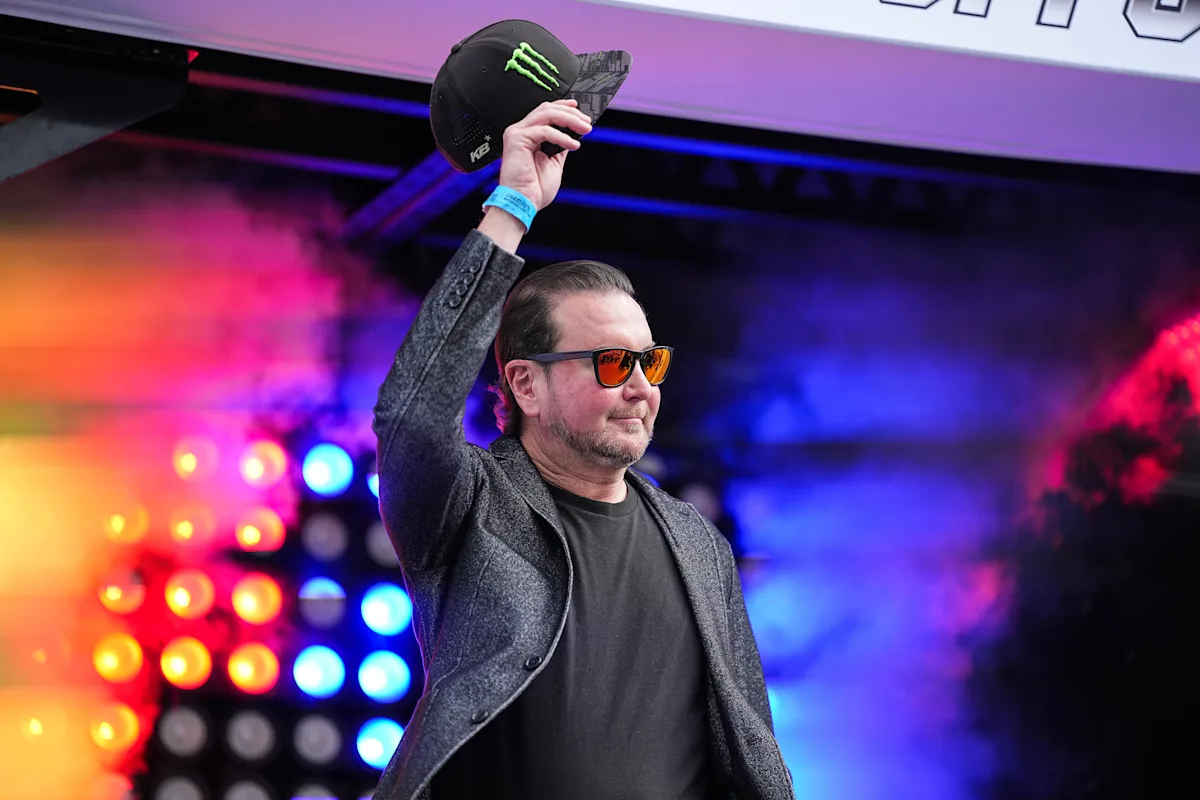
CHARLOTTE, N.C. (AP) — Success and fame came quickly for Kurt Busch.
In hindsight, perhaps a little too fast for the driver known as “The Outlaw.”
Busch won his first midget car race at the age of 15 in a small town in Nevada, giving him a meteoric rise to fame. He then won the Cup Series Championship just 11 years later, in 2004, and finished his 23-year professional career with 43 victories in NASCAR’s three national series before a concussion ended his time behind the wheel in 2023.
Advertisement
On Friday night, Busch, 47, will be inducted into the NASCAR Hall of Fame alongside fellow drivers Harry Gant and Ray Hendrick, the culmination of a drama-filled career that has had more twists and turns and momentum shifts than your typical Sunday stock car race.
There have been clashes with NASCAR. Clashes with owners and crew members of his own racing teams. Altercations with other drivers and journalists. Suspensions and firings have become synonymous with the Busch name.
There were also some high-profile relationship issues off the track.
“There’s definitely knowledge and wisdom that younger people don’t have,” Busch said with a laugh Thursday when asked if he would do things differently during an interview with The Associated Press. “And so if I could have, I would have told my younger self to be more patient and not be so animated or so excited when things went wrong.
Advertisement
“It felt like I was between highs that were too high and lows that were too low,” Busch continued. “If I could have softened it a little bit, I think it would have made it easier for me, so to speak.”
Getting to the Hall of Fame was not an easy journey for Busch, who burned his share of bridges and made many enemies along the way, often attracting unnecessary negative attention due to his short-tempered nature.
In 2005, his tumultuous six-year stint with Roush Racing, which included several on-track pushes, ended when he was suspended for the final two races of the season by the team after being arrested by police near the Phoenix track on suspicion of drunk driving for lack of cooperation and belligerence with police officers.
During a 2007 race at Dover for Team Penske, Busch recklessly clipped a crew member from Tony Stewart’s team on pit road and was parked by NASCAR for the remainder of the race.
Advertisement
His time at Penske ended in 2011 following a confrontation with a member of the media. A year later, auto racing’s governing body suspended Busch for another incident in which he threatened another journalist following a race at Dover.
Busch was again suspended before the 2015 season by NASCAR after a judge said the former champion had almost probably choked and beat a former girlfriend and there was a “substantial likelihood” that he would experience more domestic violence in the future.
Busch was never charged in incident then reinstated by NASCAR.
As Busch got older, he began to tone down some of them.
He drove his Stewart-Haas Racing Ford to his only Daytona 500 victory in 2017 and later helped laying the foundation for 23XI Racing led by Denny Hamlin and former NBA star Michael Jordan, driving the No. 45 Toyota Camry and serving as the veteran leader of the team’s expansion to a two-car operation.
Advertisement
Busch said Thursday that his rapid rise from winning the second competitive race of his life in a midget car in Pahrump, Nevada, when he was a teenager, to racing in the Cup Series at age 22 — he bypassed what was then known as the Busch Series and went straight to the big leagues because of his talent — never gave him time to mature as a person.
He then described his rise as “uncharted territory”.
“That journey and how quickly it happened, that’s why I wasn’t ready to turn pro,” Busch said.
Busch, who followed his father Tom into auto racing and paved the way for his Kyle, a very successful younger brothersaid he was raised with a burning desire to win.
Advertisement
And it never went away.
“My dad, when he was racing, he was going to the track and he wasn’t there to make friends,” Busch said. “He wasn’t here for the social hour. It was ‘We’re here for the trophy.’ So when you grew up in that mentality, it was tenacity and that’s what pushed me.
Busch doesn’t look back on his tumultuous career with regret, however.
Despite the troubles, despite the ups and downs throughout his journey to the Hall, Busch said he “wouldn’t change a thing.”
“It was my race and I have to be happy with it,” Busch said. “I’m very happy with how it all turned out.”
___
AP Auto Racing: https://apnews.com/hub/auto-racing
