

In the weeks leading up to the Australian Open, we decided to open a new front and treat it with the calm that only the absence of the daily life of tournaments can give us. In this series of articles, we will tackle the topic of tennis data, with the aim – a bit ambitious, to be honest – of guiding you from the simplest to the most complex concepts of this field to help you understand why the future of tennis, and the present too, will be strongly characterized by numbers and data.
Describing the history of a match to obtain diagrams and tactical indications is not a trivial process. It is even less easy to step outside of a single match perspective to draw trend lines recognize playing styles. Curiously, a binary sport like tennis, with discrete scores and phases of play (and therefore perfectly suited to statistical analysis), is among the laggards in this area. Despite falling significantly behind other sports like basketball and baseball, anchored in an America centered on sabermetrics, tennis has also taken a step forward in this direction in recent years.
On the WTA Tour, the analysis tools provided by SAP allowing coaches to receive detailed information on match performance in real time – and the new agreement signed with Stats Perform promises to take the concept to an even higher degree. On the ATP circuit, another IT giant like Infosys (an Indian company with over 200,000 employees) recently renewed its agreement as a Global Technology Services Partner and Digital Innovation Partner until 2023.
The use of data analysis techniques is increasingly common among large players and is also driving cultural change. this requires data analysis experts to evaluate large amounts of data on the one hand and show coaches easy-to-read information on the other. These can be used by an athlete’s team to establish both tactical plans for individual matches and long-term developments of their playing style.
The problem of data collection and processing is approached with a professionalism that varies from semi-artisanal to more sophisticated approaches. At the same time, to meet this growing demandcompanies are also beginning to provide statistical interpretation analysis and support services, the precursor of which is probably Dartfisha video marking tool (attribution of “tags” to different match events, divided into each of its 15) used for the first time by Craig O’Shannessy, the most famous analyst who collaborates as tactical analyst in Djokovic’s team.
At one end of the spectrum we find the classic approachthat for which statistical information is useful, even if it is not structured in a decision-making process: information which from time to time is intercepted by the coach who, based on his experience, develops them with a layman’s perspective. An example is Nicolas Massùwhose contribution to Thiem’s growth is undeniable and is based on his tennis wisdom.
At a higher level of consciousness, we probably find the majority of coaches who, not having the time and skills to engage in a structured data analysis process like Massù, nevertheless feel the need to receive this information in one way or another. The ideal would be for this type of coach have a qualified contact, combining tennis and data analysis skills, be able to participate in decision-making processes, speak the same “language” as a tennis coach and provide easy-to-understand information knowledge. An example is Medvedev’s coach, Gilles Cervara (until a certain point in his career), which until the summer of 2019 did not resort to this type of analysis but left the door open to possible collaborations.
The next step is a a well-defined collaboration, in which statistical analysis finally finds its place in the player’s team. At this level we find collaborations with individual players that combine tennis skills with a professional approach based on data collection and processing. We are talking about situations in which tennis skill is predominant, which, combined with craftsmanship (but effective) correspondence mapping techniques, allows obtain valuable additional information that can be successfully integrated into tactical match preparation. An example is Gilles Cervara… 2.0, who began his collaboration with a Swiss consultant, Fabrice Sbarro, in the summer of 2019. It turns out that this professional brought significant added value. He is another example of “artisans” with great tennis wisdom who paved the way for tennis analysis. Finally, the last stage of this acceptance curve of statistical analysis schemes is represented by the inclusion in the coaching process of services offered by specialized companiessuch as Gold set analyzes (GSA), which evaluates the performances of more than 150 players on the ATP circuit thanks to the work of a team of experts. In addition to GSA, a leader in this sector, other companies offer advanced services such as Data-Driven Sports Analytics Or Sports Analysisiii. This link will take you to an interview with the founder of the latter company, who blending advanced Big Data and data representation techniques and is moving, like the DDSA, towards the integration of automatic capture techniques from video sources.
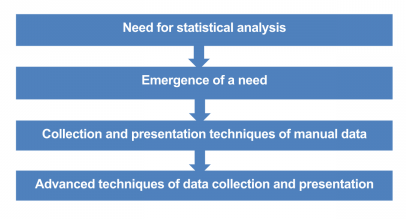
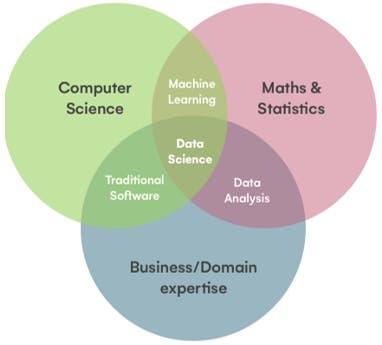
If we want to refer to the graphical representation at the beginning of this article, the world of tennis enters the awareness phase by the commercial domain (i.e. players and coaches) and takes the first steps towards data analysis applicationswhich, enriched over time with advanced data processing functionalities, will allow the full deployment of data science techniques.
In conclusion, the panorama is extremely varied: it goes from enthusiasts like Djokovic, who began using statistical reports through the collaboration with O’Shannessy, in order to identify playing patterns to use in crucial moments. Another player who said he uses O’Shannessy’s services is Berrettini, who, unlike Djokovic, prefers not to receive very granular informationbut only “pills” of statistical data which can be of immediate help without running the risk of too much confusion. Another actor who has reported using data analytics services is Zverev, who spoke about it during the 2019 ATP Finals as an important help in better controlling the playing style of his rivals. Another example of virtuous collaboration in the female category is that which benefits Bianca Andreescu, who, thanks to the support of Tennis Canada, was able to receive timely analytical reports for his own match preparation.
On apparently vaguer positions we find Federerwho has repeatedly stated how the data is interesting, but needs to be handled with care so as not to be misleading. However, in addition to being a GSA client, according to a flee reported some time ago by the Telegraph Federer maintains a special relationship and therefore for a higher price, he would have access to exclusive information that is not accessible to his opponents.
Nadal’s position is much more conservative. He has repeatedly said that he chooses to rely on Moya’s tennis talent for the preparation of his matches (and given the masterpiece of the last final in Paris, we do not dare to blame him). According to Nadal, the use of analysis techniques is mainly limited to use of sensors for the bio-mechanical representation of his shots and to acquire information on his gamebut without pretension of tactical comparison with his adversaries.
Concluded this first look at the most prominent tennis players using a “data driven” approach, we await you with the next article in the series, in which we will specifically analyze which are the most important metrics to analyze in the world of tennis.
Article by Federico Bertelli; translated by Alice Nagni; edited by Tommaso Villa
