

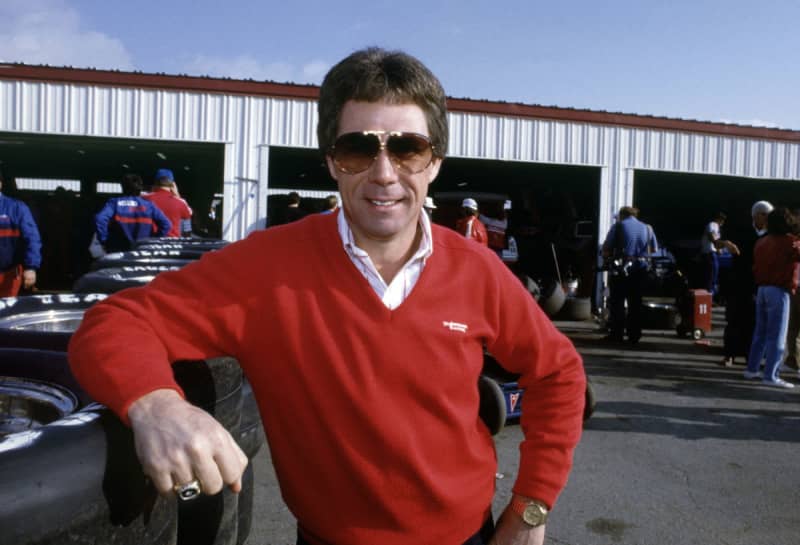
“Boogity, Boogity, Boogity!” Three NASCAR Cup Series championships, 84 victories that propelled him to the Hall of Fame and numerous on-track rivalries. These are just simple statistics Darrell WaltripNASCAR career. The real Darrell Waltrip existed beyond those numbers. He existed in the frustrated radio calls, in the attention lines in front of the media, and in the endless chatter. Darrell Waltrip wasn’t Darrell Waltrip unless he opened his mouth.
When he initially joined NASCAR, he was no one racing with humble origins. They never thought that the “neat, clean, well-spoken and polite” boy would turn into a non-stop hotbed of chatter. But when he took the next step in his career, once again his chatter was the main factor that made him a fan favorite. Even those who hated him behind the wheel were glad he was in the cabin.
Advertisement
Fans still miss the legendary “Boogity” today. NASCAR didn’t need cheerleaders. The perfect one was behind the mic, doing random one-liners, bursting into song. While today’s fans remember Darrell Waltrip primarily for his “Boogity” energy in the booth, longtime fans know that his persona on the track was much louder, sharper and far more polarizing.
Now that he’s left the sport, on and off the track, Darrell Waltrip’s absence feels more like a haunting silence. Let’s dive in to explore the legacy of legendary chatter that he provided.
Darrell “talks, walks” Waltrip
Motorsport is an extreme sport and athletes gamble with their lives while racing. Quite naturally, drivers would end up saying words they don’t mean. Waltrip, on the other hand, said those words just for fun.
Advertisement
“I loved the attention I was getting.”
That’s all he said to explain his trash talk and constant bickering on the radio. For Waltrip, media interviews were his time to shine in the sun.
“The other guys were big superstars. I wanted to be a superstar. No matter what, I was ready for anything.”
Although he maintained a personality that would bore even the most devoted fan, Waltrip was never caught off guard behind the wheel. He was always among the best drivers in the Cup Series during his era.
From 1977 to 1989, Waltrip won multiple races each season, leading more than 2,000 laps each year. His consistency behind the wheel has placed him in the Top-5 for 11 consecutive seasons.

RIVERSIDE, CALIFORNIA – NOVEMBER 17: NASCAR driver Darrell Waltrip celebrates his 7th place finish in the Winston Western 500 at Riverside Speedway with Junior Johnson as he won his third NASCAR Grand National driving championship on November 17, 1985 in Riverside, California. (Photo by Bob Riha, Jr./Getty Images)
But that was just his point of view. “Jaws,” as the other drivers called him, was his image before them. It all started with Cale Yarborough.
Advertisement
During the 1977 Southern 500 at Darlington, Waltrip was involved in a 5-car crash on the track. His actions prompted Cale Yarborough and fellow driver DK Ulrich to give him that name. In the legendary conversation, Yarborough said:
“I didn’t hit you. ‘Jaws’ Waltrip hit you and threw you against the wall. You fell off the wall and hit me. That’s what happened. It was completely uncalled for.”
It was a nod to the popular 70s film, Jaws. And boy, was it perfect – Yarborough’s analogy summed up Darrell Waltrip perfectly – fierce on the wheel and witty with his voice, like a mouth coming to devour you on the track.
“Jaws” for drivers, “Muhammad Ali” on ovals
Former Charlotte Motor Speedway manager HA “Humpy” Wheeler knew Waltrip’s tactics. In his eyes, Darrell Waltrip was “Muhammad Ali” on the ovals.
Advertisement
“I’ve read every book ever written about Muhammad Ali and this is a carbon copy. Darrell just went, partly in the worst environment, because he’s telling this to guys who want to put him in the wall. If you look at Thomas Hauser’s biography of Muhammad Ali, you’ll see Darrell Waltrip all the way through that and how a new guy on the block, whether it’s Ali or Waltrip, starts talking to industry celebrities and letting them know he’s here to stay and staying get out of my way.

It was a big deal. Waltrip competed with Bobby Allison, Buddy Baker, David Pearson, Cale Yarborough, Dale Earnhardtetc. These drivers are some of the most successful NASCAR competitors, but more than that, they were tough and wouldn’t think twice about making you pay to annoy them on the track.
The best example of this was during the race at Richmond Raceway in 1986. Earnhardt pushed Waltrip into the guardrail en route to victory – a direct result of trash talking about his team. He would also wrest the NASCAR Cup Series title from Waltrip, who was the defending champion that year.
Advertisement
During his days on the track, his incessant trash talk made him a menace. He was equally hated by fans and drivers. But he knew how to handle it all. He knew that no one would dare thwart him as long as he produced results. But what happened after he left NASCAR?
Booth entertainer and the pride and joy of NASCAR
On February 18, 2001, Darrell Waltrip sat in the FOX broadcast booth. The audience was skeptical but willing to listen. And that’s where it all started. At first, no one could match the excitement in his voice at the sight of his brother winning the Daytona 500. However, without delay, he adopted a somber tone, asking about Dale Earnhardt and wishing that he was okay.
That’s when the public saw the reality behind Darrell Waltrip’s constant chatter while driving. As journalist Larry Woody rightly noted,
Advertisement
“There was always a little twinkle in his eye, like he was just having fun. I don’t think he ever changed in that regard.”
The FOX show was his breakthrough moment. He has become the one thing fans wouldn’t want to miss on a race day. This was partly because of his racing knowledge and experience as a winning driver, and partly because he knew the crowd inside and out. In his own words,
“Race fans are very intelligent. They know what’s going on. How are you going to tell them something didn’t happen when they saw it? You can’t try to fool them. You just have to tell them like it is.”

BRISTOL, TN – APRIL 17: Team owner Darrell Waltrip speaks to the media during a press conference prior to practice for the NASCAR Sprint Cup Series Food City 500 at Bristol Motor Speedway on April 17, 2015 in Bristol, Tennessee. (Photo by Sarah Glenn/NASCAR via Getty Images)
This is how he slowly connected with the very community that once hated him for his trash talk. They got to know his true side. The guy who was just happy to be there, the rider who wanted glory and the really good-hearted person were off the track.
Advertisement
Jeff Gordon rightly explains what Darrell Waltrip meant to NASCAR as a broadcaster.
“DW helped the show introduce drivers, like me, to viewers, and brought a different perspective on how racing is broadcast. I tell him all the time that he’s a Hall of Fame driver, but he’s also contributed to the sport as a broadcaster.”
Darrell Waltrip came to NASCAR from humble beginnings. He started out as an arrogant kid with a talent like no other. In all his years in the sport, he has undergone a complete overhaul in the public eye. But the one thing that remained constant was the fact that he never stopped talking.
His impact in NASCAR is best described by Wheeler’s reaction to his trash talk.
Advertisement
“Hell, he was good at racing back then. He was a breath of fresh air because he talked and put us on the front page instead of the second page.”
Nobody wanted Waltrip to change. He was perfect that way, because “half the fans hated him and the other half loved him.” But ultimately, he attracted fans to him one way or another. No one could escape the “Jaws”.
The position Before ‘Boogity’ – Darrell ‘Jaws’ Waltrip’s Dark Story That New Fans Forget appeared first on EssentiallySport.
