


By Mertezaker, Photo: SPFCG

07.12.2018. 12:38 p.m.
Azurirano: 07.12.2018. 12:38 p.m.
When we talk about the health problems of football players, we generally think of physical injuries – tendons, groin, meniscus, etc.
We don’t talk much about problems of a different nature, but more and more players reveal that during and after their career, they suffered from depression, anxiety, addiction…
Diseases of the modern era are present in even the most glamorous sports and on the biggest stages. Perhaps even on a larger scale than in other sectors…
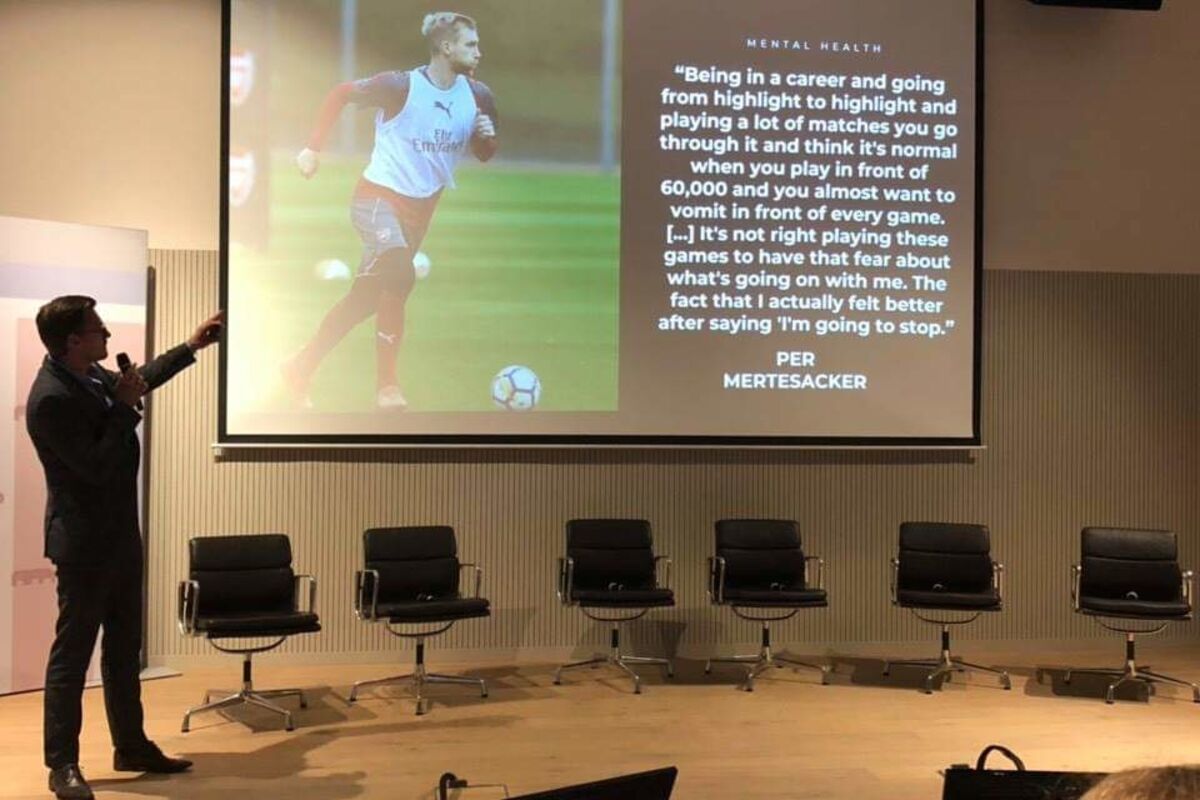
“The expectations that professional footballers set for themselves, the expectations of clubs, coaches and the global public – are definitely becoming obstacles that many of them cannot easily overcome without feeling the consequences,” said Maida Burdžović, specialist in psychiatry, who recently appeared before the Union of Professional Footballers of Montenegro in Amsterdam at a seminar dedicated to the mental health of football players, organized by FIFPro.
Bojan Krkić’s story that he suffered from anxiety throughout his career has gone around the world. Andres Iniesta recently revealed he was thinking about suicide…
“The problem of depression in the world of football, for example, is often present. It is a masked depression, which is not recognized in time and which is not treated as it should be. Moreover, it is no longer a surprise when we read that footballers seek psychoactive substances, but few people wonder why,” notes Burdžović.
For many of them, the money they earn is not enough to buy happiness, peace, stability in life, which is specific since childhood…
“Even though we envy them, they have a state of patience in which satisfaction and success quickly reach a high level, because of a goal or a victory, but new demands are immediately imposed on them,” emphasizes Burdžović.
This is why top footballers, who last for years and shine at the highest level, are not only extremely talented and physically fit, but also mentally strong…
“They cannot be emotionally labile, because lability does not allow them to quickly recover from success or failure,” emphasizes Burdžović.
In Amsterdam they discussed how to help and overcome problems. Some countries, such as England, have a long history of addressing the mental health of football players, who benefit from a wide range of professional help.
“At us, we are not aware that a person cannot succeed in anything if he does not have mental stamina and maturity,” emphasizes Burdžović.
The first target group to raise awareness is that of coaches…
“Because they are the first to find a way to approach everyone individually so that the team can be more successful,” Burdžović said.

News
