

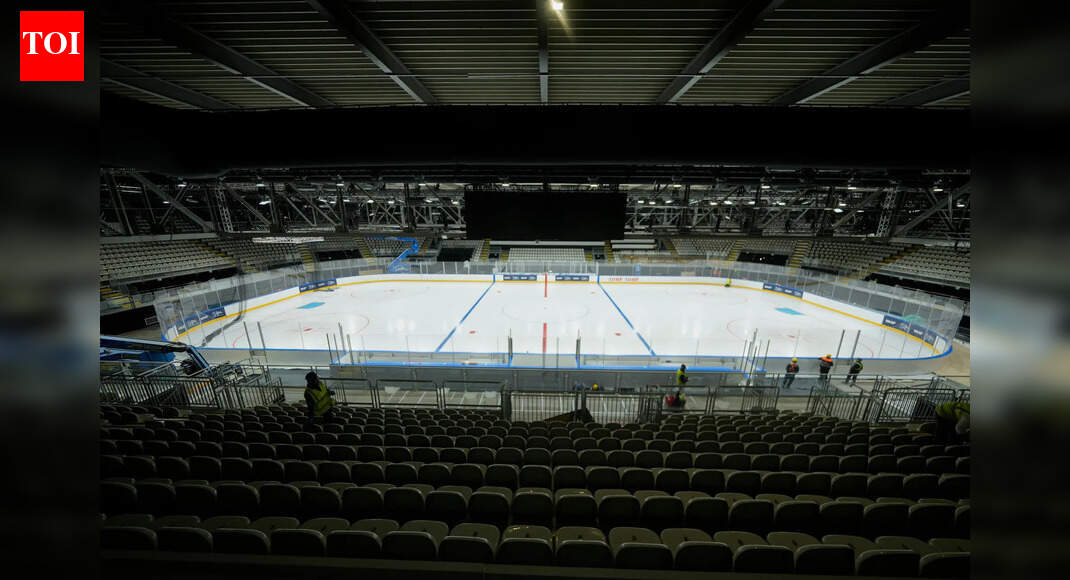

With the 2026 Winter Olympics just months away, serious doubts have arisen over the preparedness and safety of the premier hockey venue for the Winter Games, as it recently emerged that Milan’s Santagiulia ice hockey arena is facing issues with rink size. As the global hockey community prepares for the return of NHL players on Olympic ice for the first time since 2014, questions swirl about the rink’s dimensions, construction delays and the potential risks posed by playing in compromised conditions.Meanwhile, NHL Deputy Commissioner Bill Daly sounded a warning while speaking to reporters Monday at the league’s board of governors meetings in Colorado Springs: If players don’t feel the ice quality is safe, “then we’re not going to play.” Earlier, the NHL confirmed its players would only participate in the 2026 Winter Olympics if the main Olympic hockey arena in Milan was completed on time, a condition firmly stated by Deputy Commissioner Bill Daly last Thursday.
NHL officials say players won’t play due to rink safety concerns
After hoping to compete in the Winter Olympics this time, the dream seems distant for NHL teams to compete in the event due to concerns about rink size and construction delays.In July, the NHL, the International Ice Hockey Federation (IIHF), the International Olympic Committee (IOC) and the NHL Players’ Association (NHLPA) finalized an agreement that would allow NHL players to return to the Milan-Cortina 2026 Winter Olympics. This brings the world’s best hockey talent to the Olympic stage for the first time since 2014.
However, due to construction and safety concerns, the NHL and IIHF issued a warning regarding the potential removal of a player. In fact, delays in the construction of Milan’s Santagiulia Arena pushed the completion date back to February 2, 2026, just three days before the women’s tournament was scheduled to begin.According to reports, NHL games at two arenas will be played in rinks 60 meters long by 26 meters wide, or 196.85 feet by 85.3 feet. The NHL’s dimensions are 200 feet by 85 feet (60.96 meters by 25.908 meters), so the Olympic ice will be slightly wider and shorter by more than 3 feet. Critics warn that a smaller ice surface could compromise player safety, especially given the speed and physicality characteristic of the game at the NHL level. And, Bill Daly, NHL Deputy Commissioner made it clear that security remained non-negotiable. If ice conditions or rink configuration are deemed unsafe by players, the NHL will not allow participation. “If the players feel the ice is unsafe, then we’re not going to play,” Daly said.However, he is also optimistic that the problems will be resolved soon. Commissioner Daly also said, “We have proposed, and they are bringing in our ice experts, our technicians and our outside suppliers. We’re basically moving everyone there to try to help accomplish this in a way that’s acceptable to NHL athletes. And I am cautiously optimistic that it will be successful.During this time, the NHL will have continued access to the ice, which will include an on-site presence for a test event scheduled on the main ice from January 9-11, 2026.Also read: What is Connor Bedard’s net worth? : A look at the Chicago Blackhawks winger’s salary, contract details and endorsement | NHL News – The Times of India
