

HUNTSVILLE — The year is 1993 and Bill Walsh College Football is released on the Sega Genesis.
College football has come to a home video game console for the first time ever. The game has no official NCAA license, so among unbranded public schools like Alabama, Florida, Georgia and Tennessee are exotic names like Provo, College Station, Pullman and State College.
The 12-year-old version of your columnist had no idea what Provo, Pullman or State College meant, but with uniform colors and roster numbers, I was able to piece together the puzzle. State College was blue and white with #12 at quarterback, #32 at running back and they were very hard to beat. It must be Kerry Collins and Ki-Jana Carter, so State College was Penn State and State College must be the town where the university is located. After enough time, I was able to figure out that BYU was in Provo, WAZZU was in Pullman, and State College was where you would find Texas A&M. The video game taught me the real game.
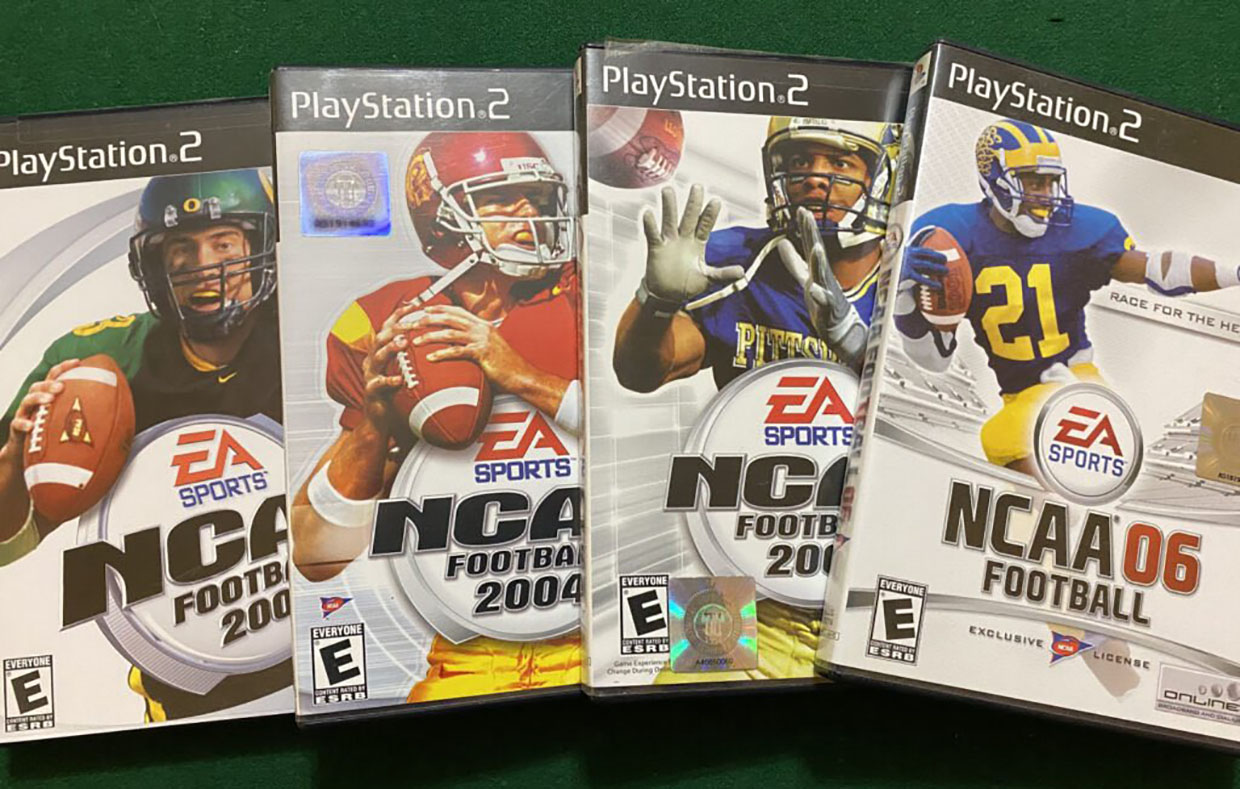
Over the next two decades, NCAA football would continue to teach young children the intricacies of college football. The only reason I know the Foy-ODK Sportsmanship Trophy is awarded to the winner of the Iron Bowl is because of the play. I know a screen pass is a great way to beat a blitz through the play. I love the Lamanski Room. And it’s because of college football video games. I became much more aware of teams not named the Crimson Tide because of these games. I think (wrongly) that I could definitely do a better job than most offensive coordinators because of video gaming.
The series was a milestone in the overall growth of college football’s popularity for a generation of fans, but it died out after the release of NCAA Football 14. Why did this wildly popular video game franchise disappear nine years ago? This was due to three words that are the hottest topic in college football today: name, image and likeness. Champion UCLA Bruin, Ed O’Bannon has won an antitrust class-action lawsuit against the NCAA. The fallout saw the game’s producer, EA Sports, halt production of its basketball and football games due to the results of the lawsuit, as it would no longer be financially viable to produce the games and would have to pay for the use of the athlete’s likenesses.
The next generation of future college football fans missed out on the hands-on experience of building a virtual dynasty, managing promises made to digital recruits, scheduling opponents, and hands-on learning the blocking schemes of an RPO.
EA Sports has put all its efforts into supporting its NFL offering and its Madden franchise has become a dominant force in the industry. Obviously the college football business is doing very well, but the loss of the video game series has impacted how I view the players themselves.
During the heyday of gaming, I was much more familiar with real gamers because I spent a lot of time with their digital counterparts. In the game’s Dynasty mode, you play with the same team season after season so that the freshman class becomes seniors within reach.
Real enthusiasts might even change player names to be direct copies of the real roster. Sitting down with a hard copy of a list and using a directional pad to enter fifty or so names into a 16-bit console creates a certain connection between the video game player and the human player the sprites represent.
Trying to take a Mountain West team to a national title makes you realize how difficult it can be to go to Fresno and come away with a victory. I have nightmares about how difficult it was to cover Louisville’s number 9 (Joshua Trench) in the 2005 version of the game and to this day, if I call my college roommate and ask him who the best football receiver of all time was, he’ll say “That bad number 9.”
Fans of college football video games are eagerly awaiting the revival of the franchise. We’ve been promised a new title in 2023. In the video game industry, in college sports, and in life, however, promises are made to be broken.
If not for me, I hope to see new NCAA football video games on our screens soon for a new generation of fans.
